MICROSOFT
Reimagining ambulatory rooming and arrival through patient-centered, AI-enabled design




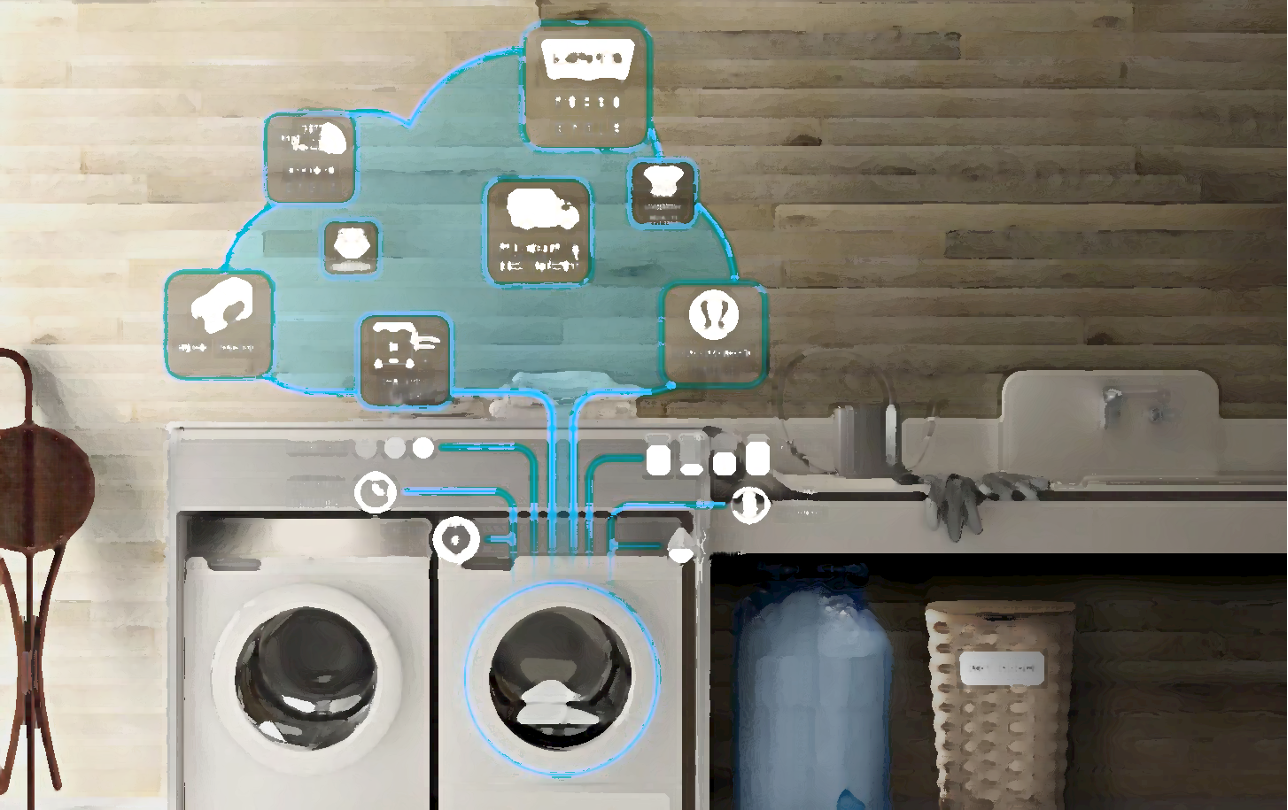
The image was generated with AI.
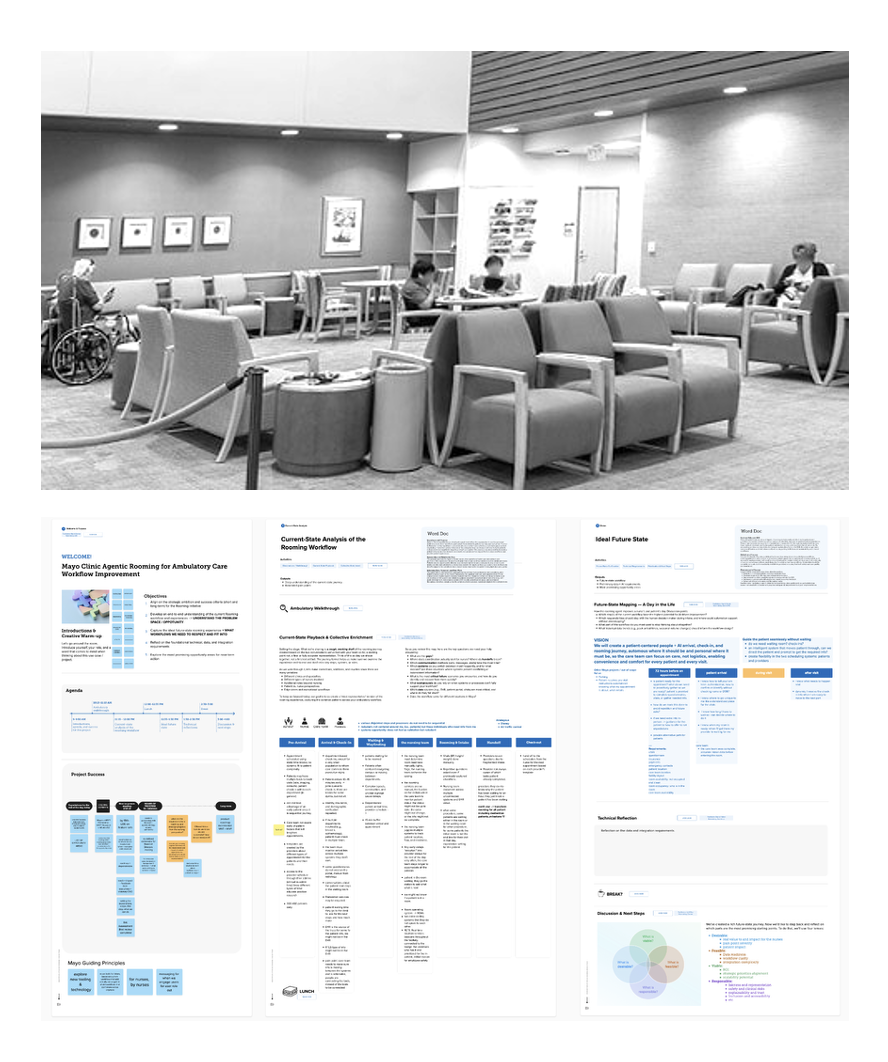
Ambulatory rooming workflows are high‑volume, time‑constrained, and cognitively demanding, placing significant documentation and coordination burden on care teams. Existing tools often obscure decision timing and workflow clarity, risking inefficiency while threatening clinician judgment, patient safety, and trust in outpatient settings.
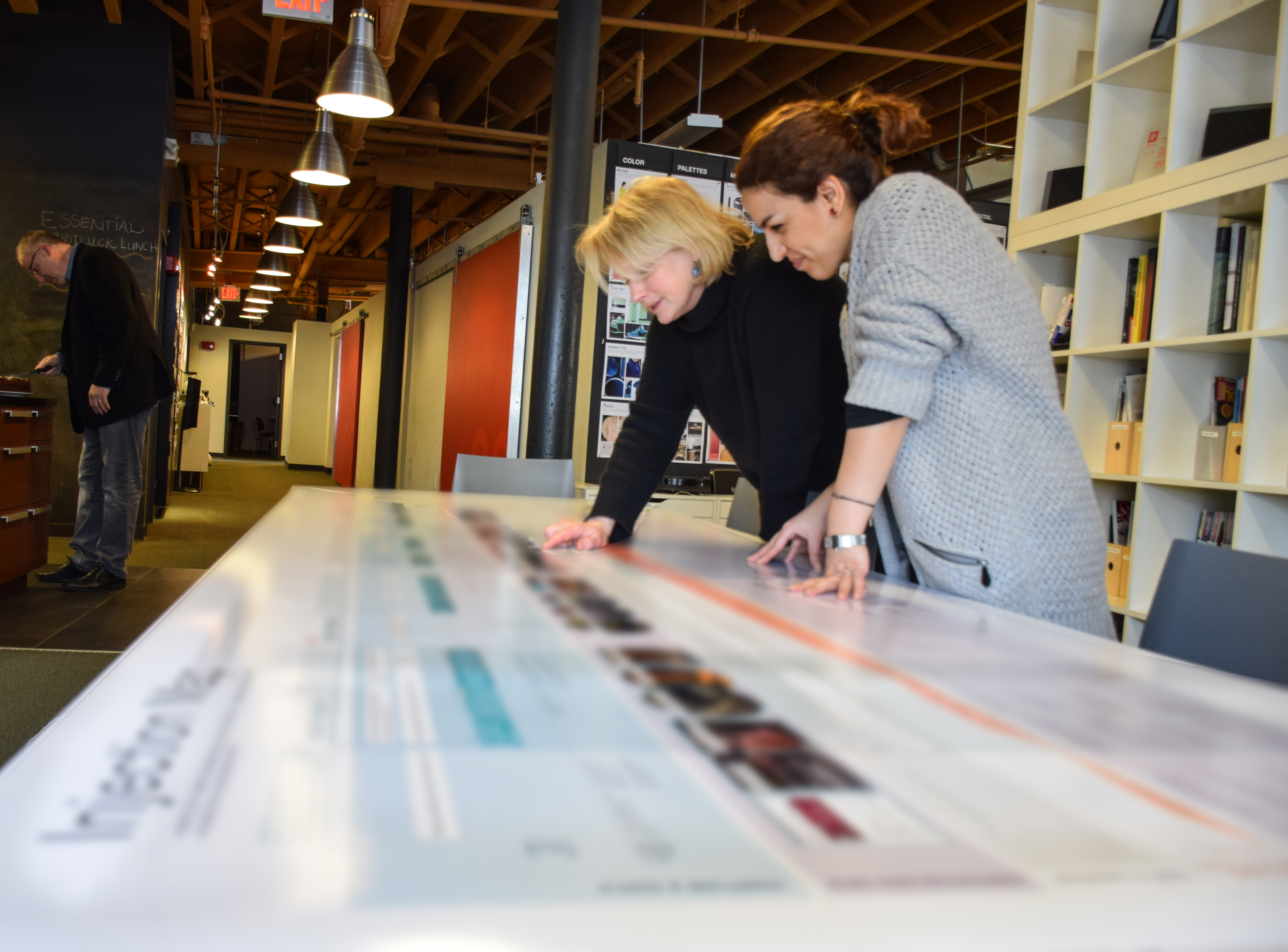
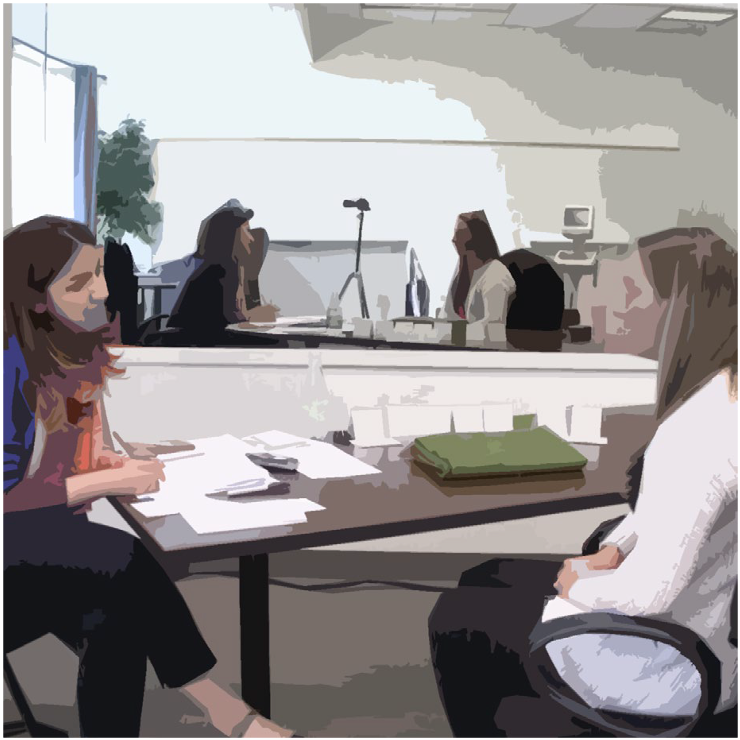
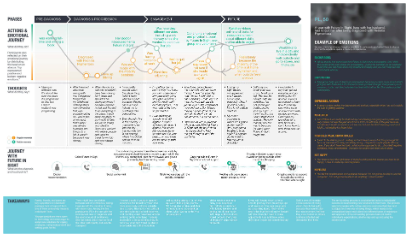
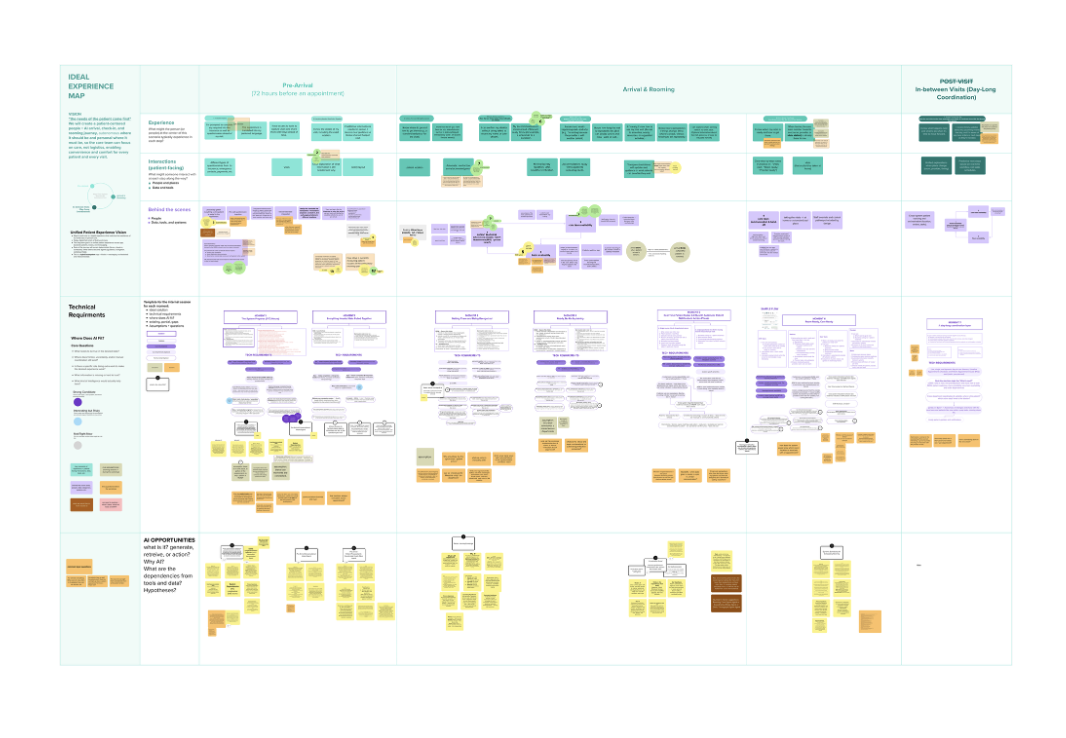
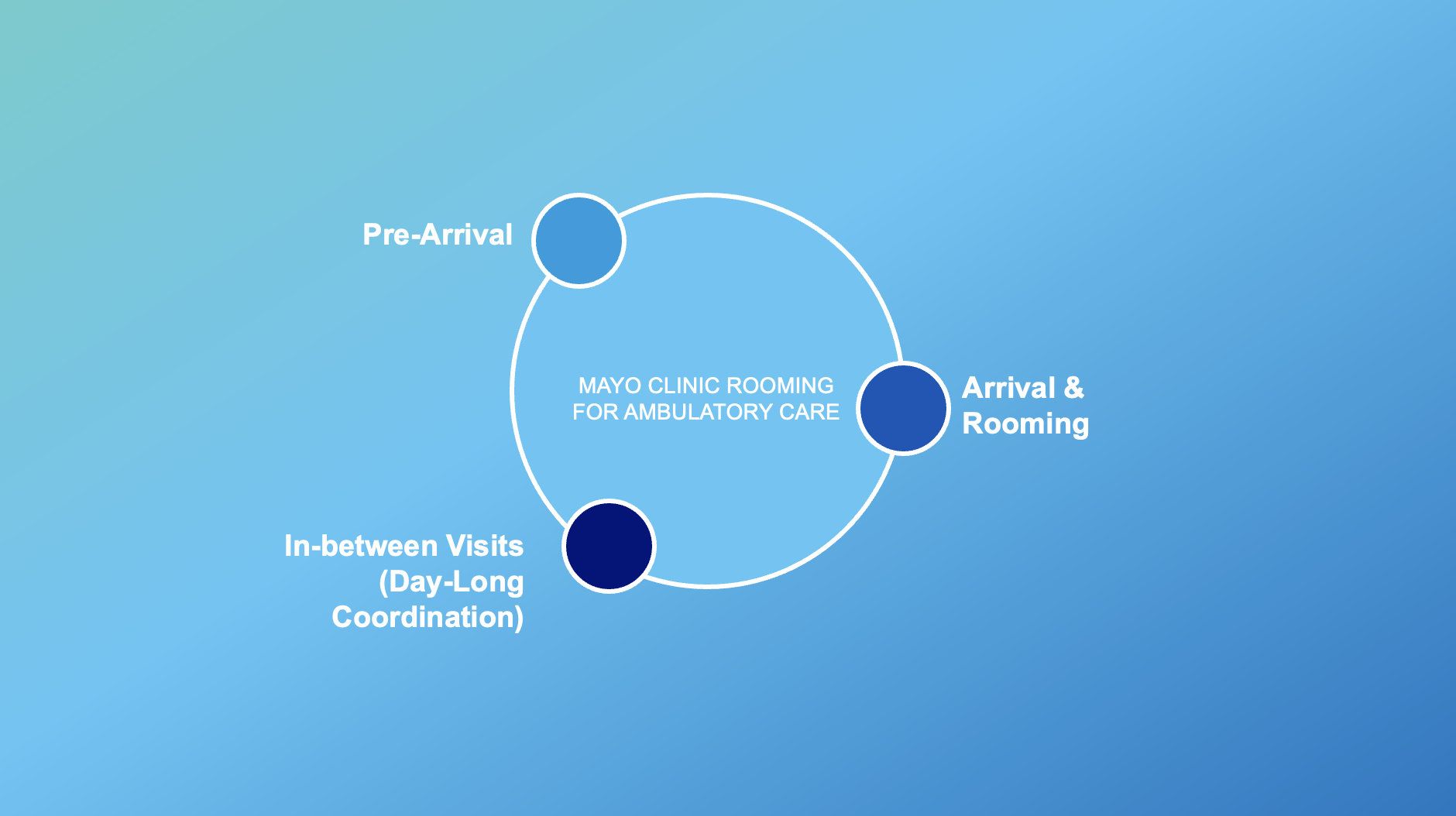
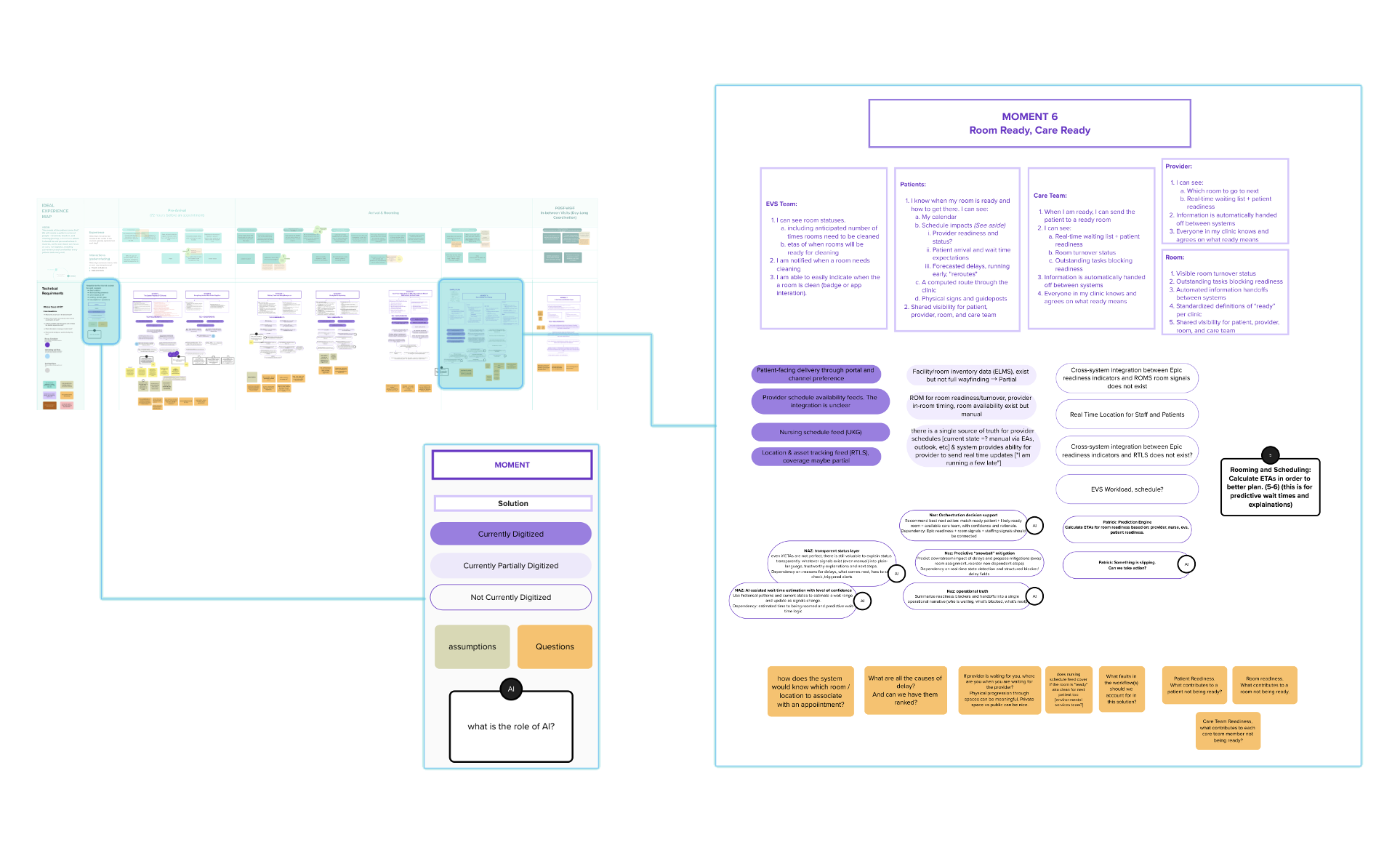
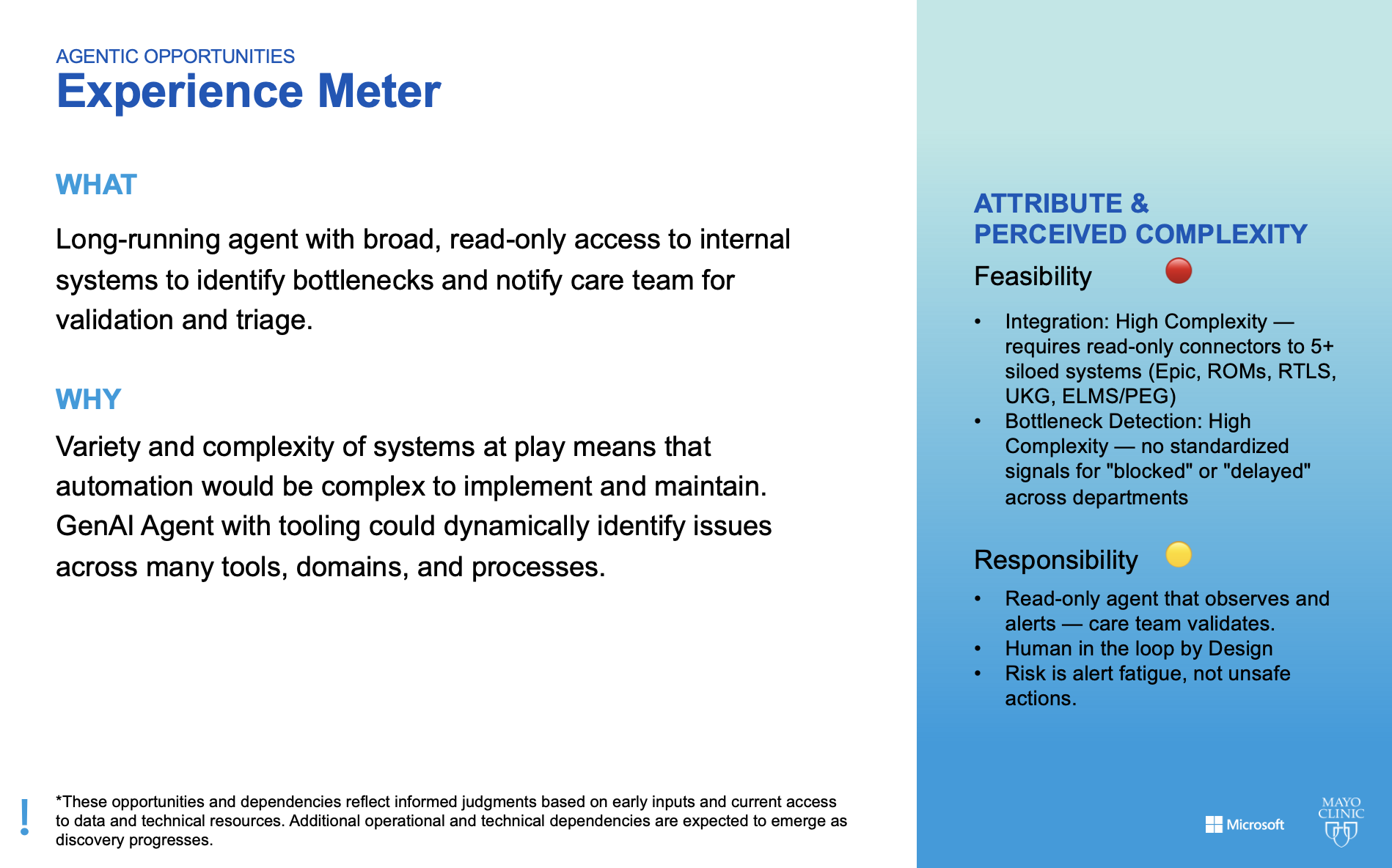
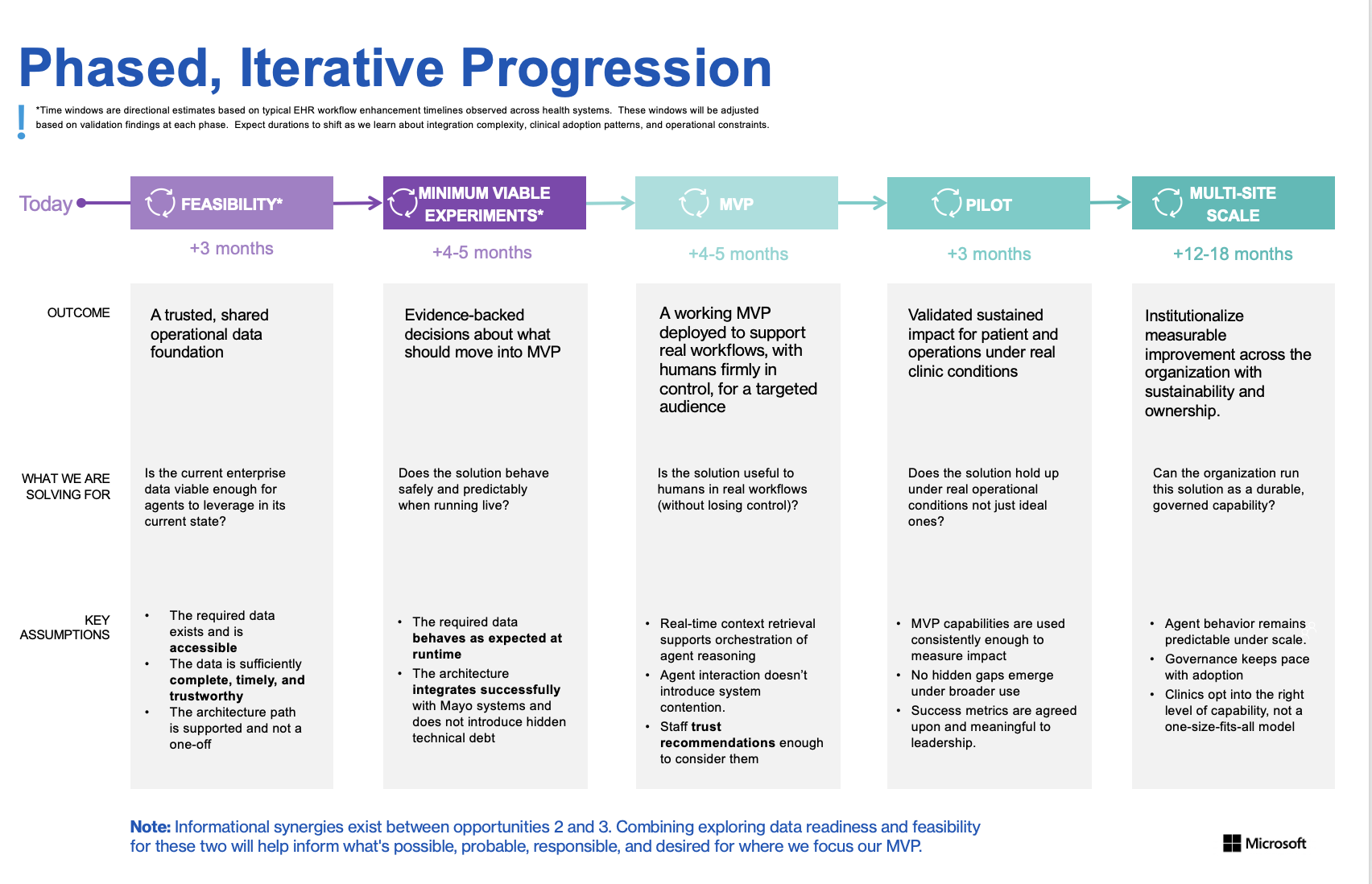
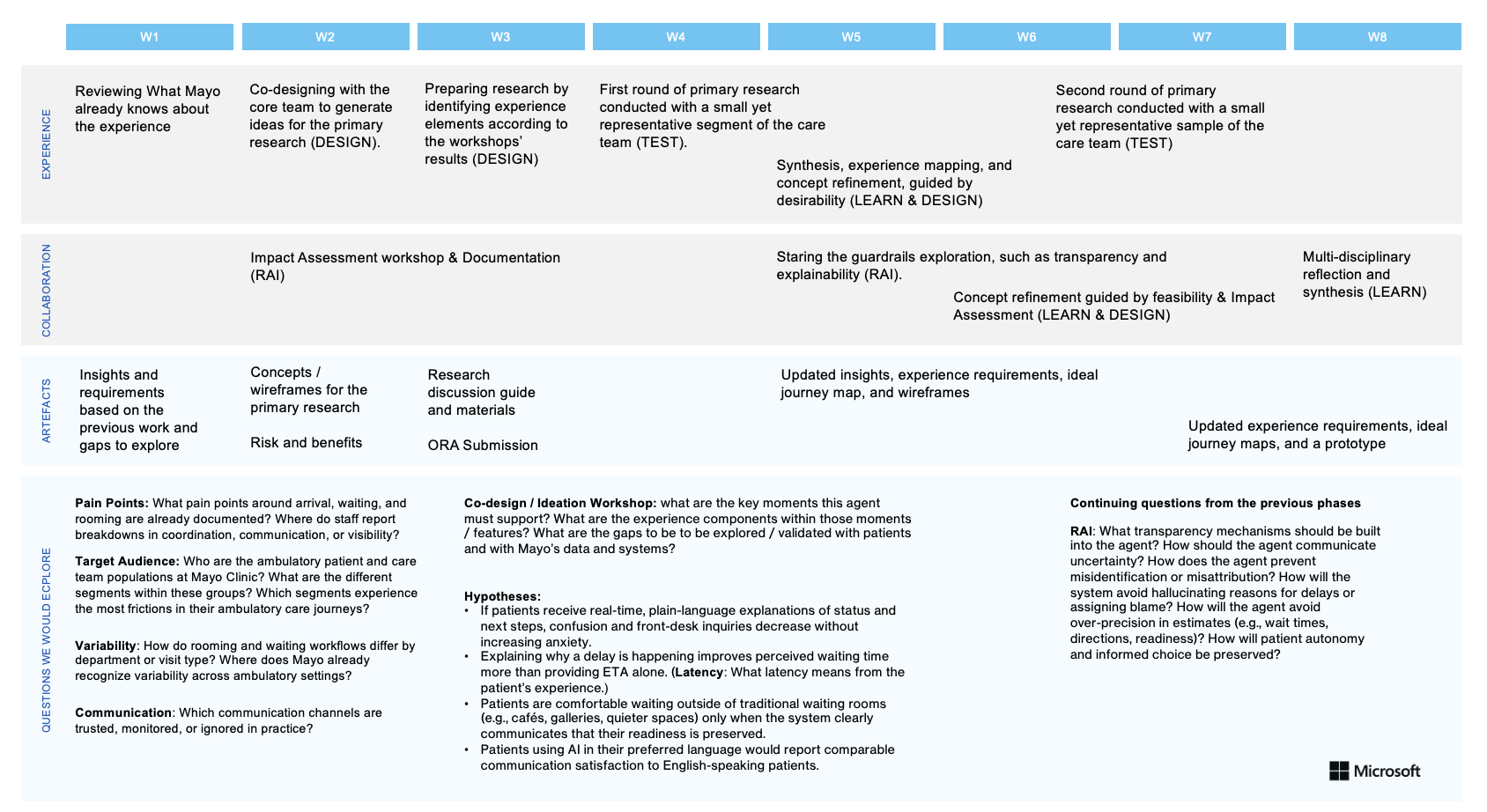
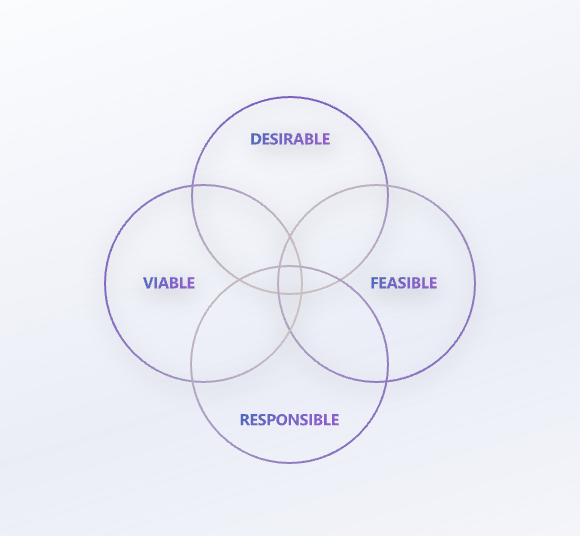
I led a multidisciplinary, participatory design engagement, working closely with clinicians, operational leaders, data science, and product partners to identify and shape AI‑enabled opportunities within ambulatory rooming workflows. Through field visits, journey mapping, and co‑design workshops, we synthesized clinical realities with technical constraints to define high‑value intervention points. The resulting system vision emphasized augmenting, not automating, clinical work, clarifying decision moments, reducing cognitive and documentation burden, and integrating AI responsibly into existing workflows. Insights were translated into a phased, responsible roadmap, balancing desirability, feasibility, viability, and safety.
The work aligned clinical, operational, and technical stakeholders around a shared vision for AI‑enabled ambulatory care and informed leadership investment decisions. The roadmap established a foundation for piloting and scaling responsible AI solutions across outpatient settings, with clear principles for trust, workflow fit, and clinical autonomy.
The image was generated with AI.
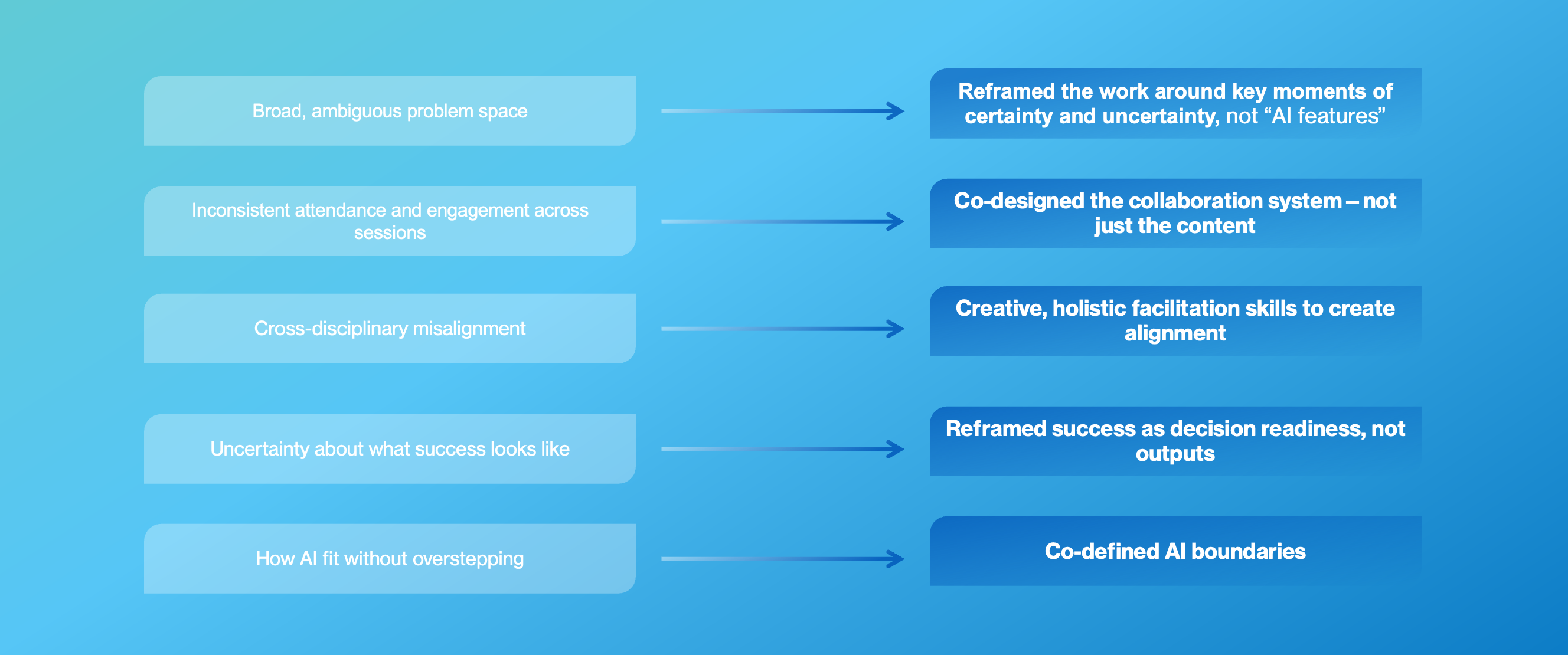
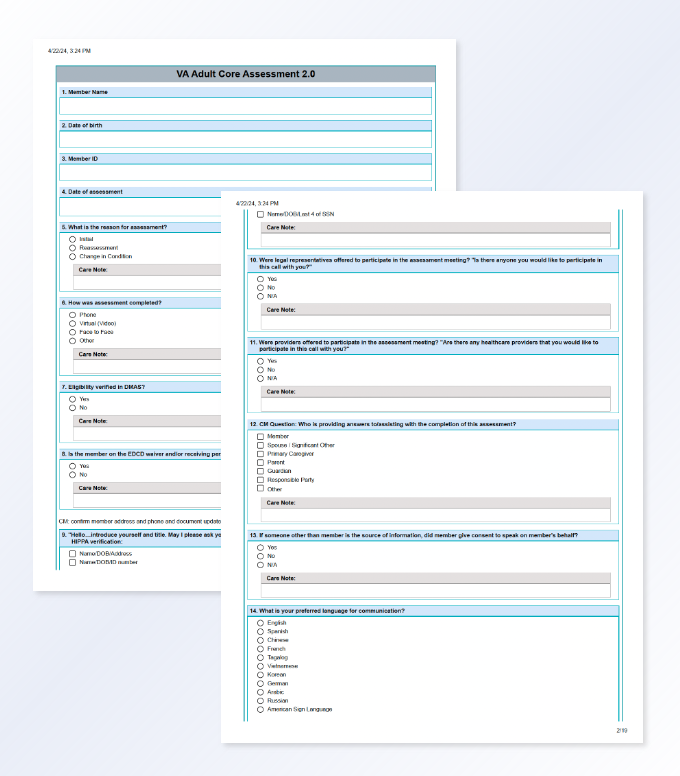
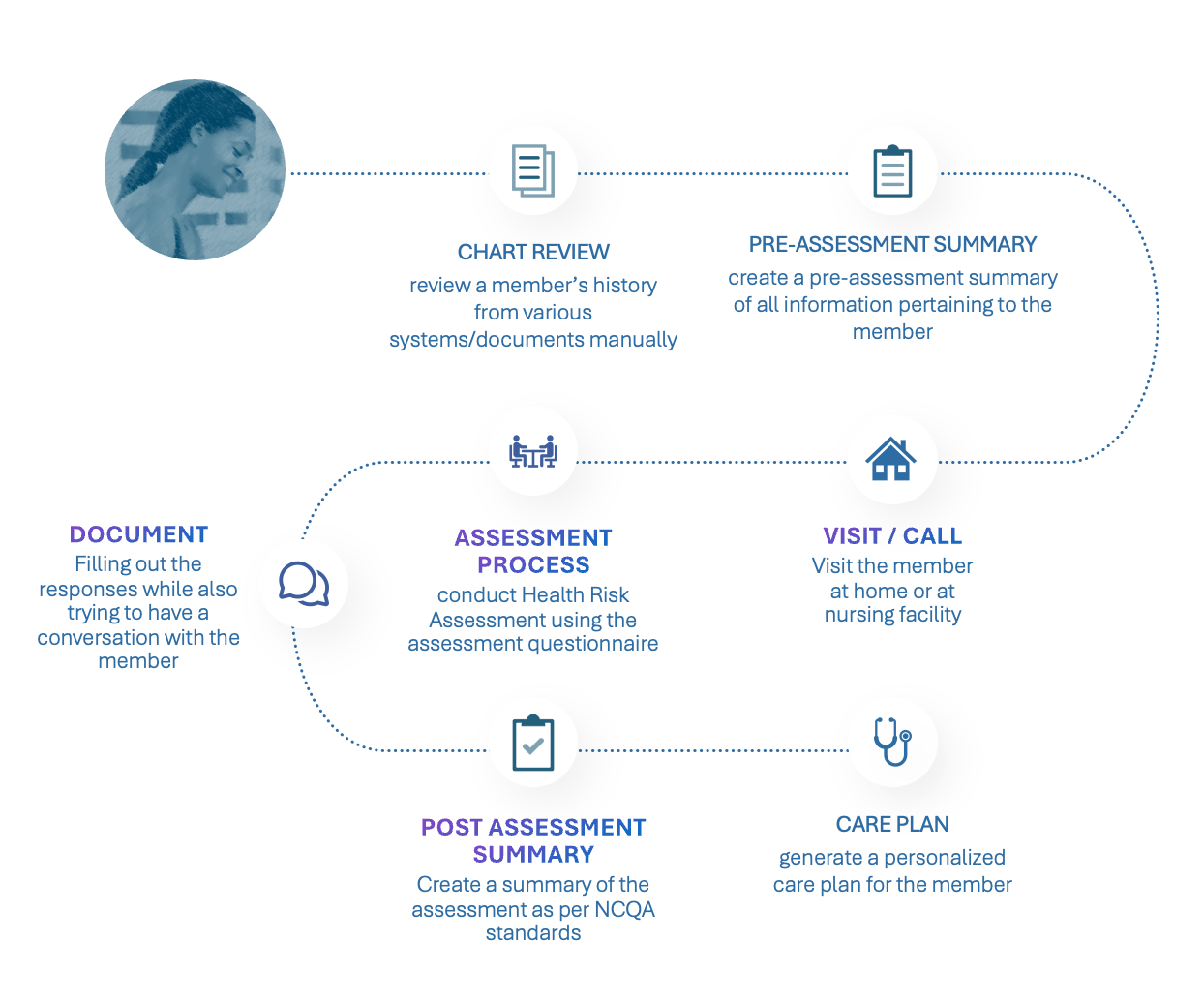
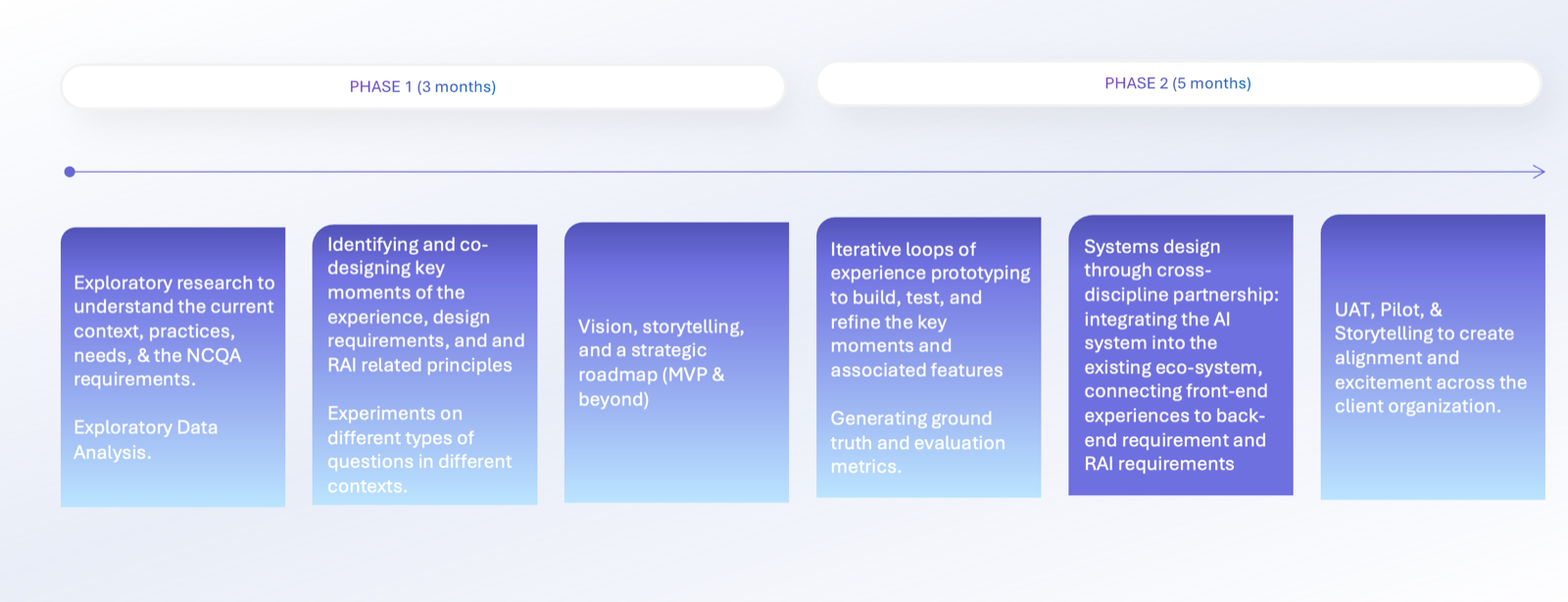
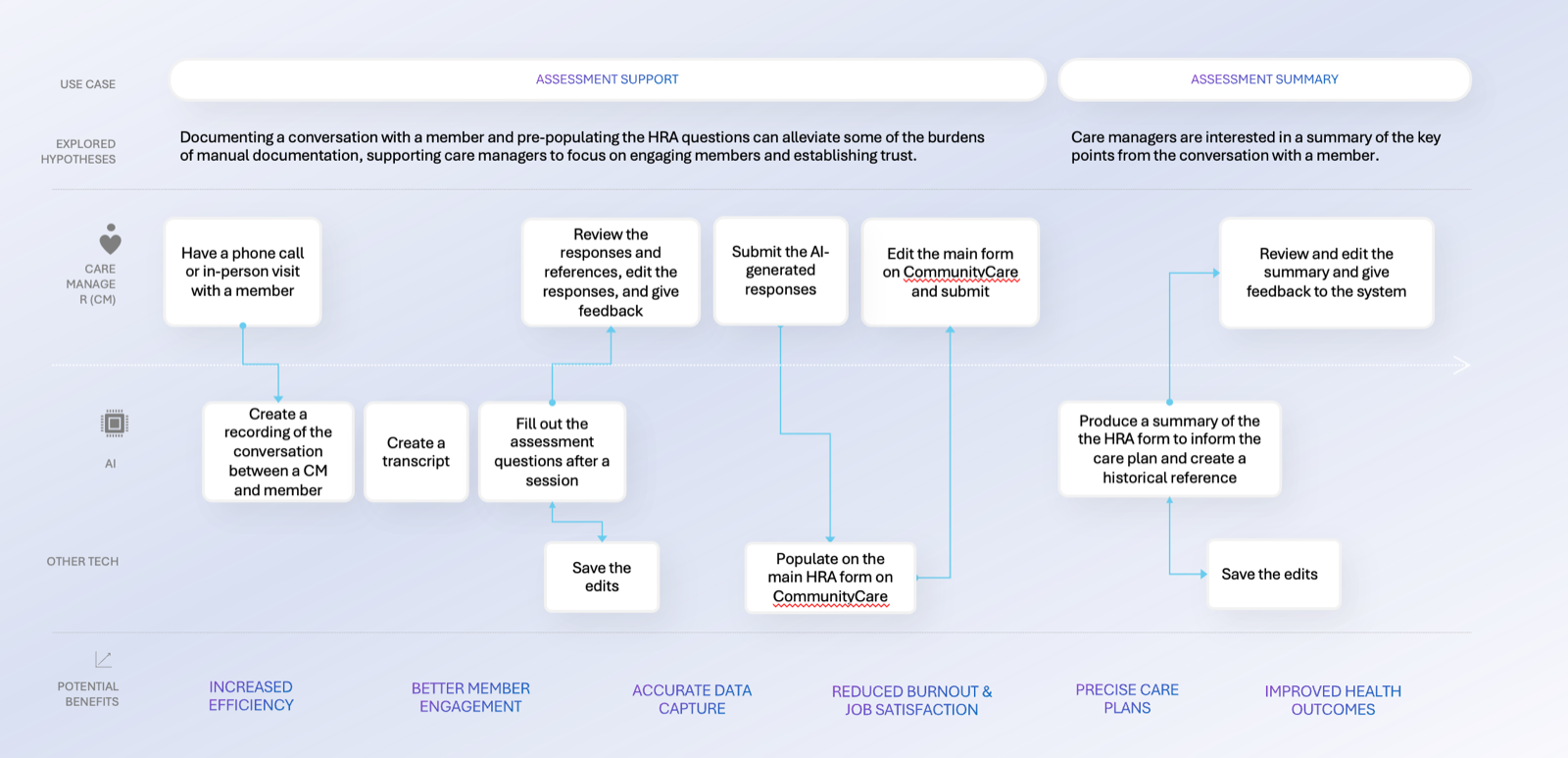
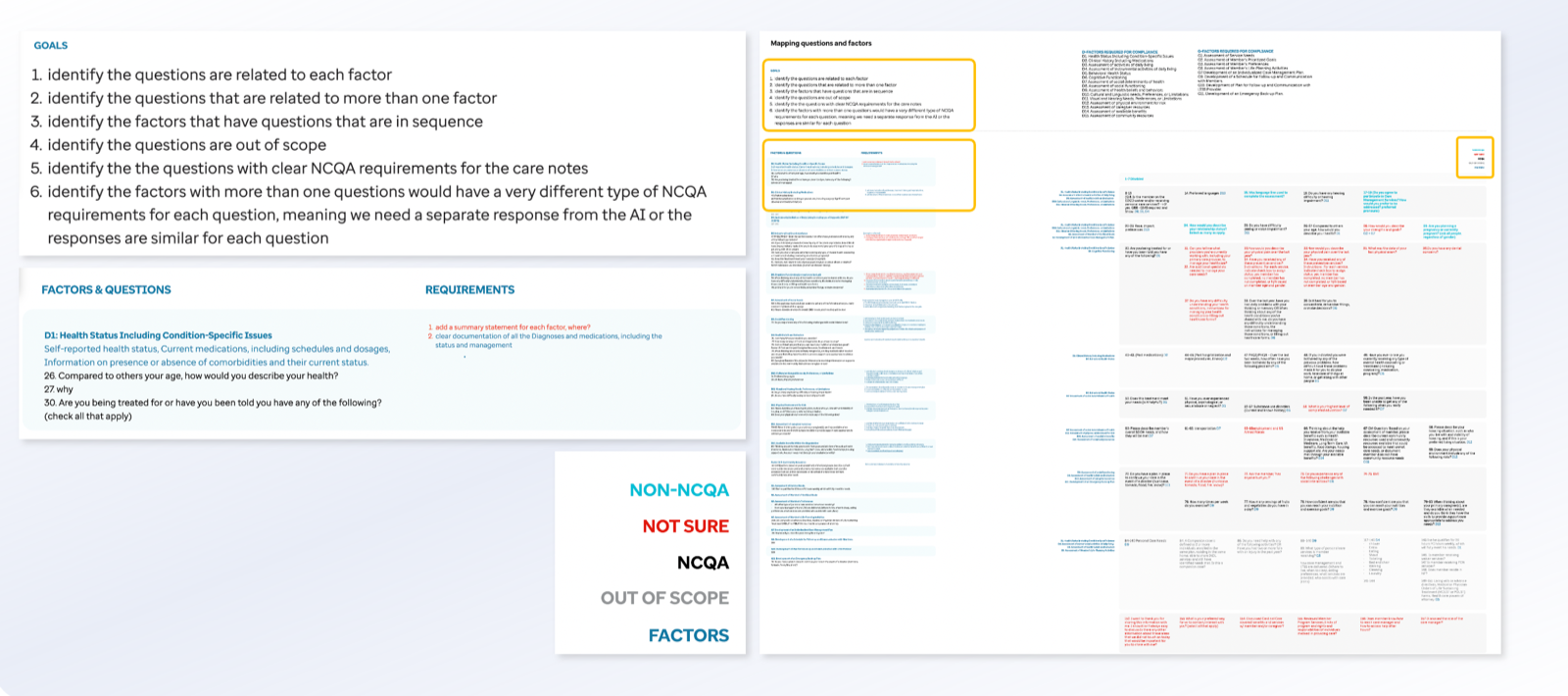
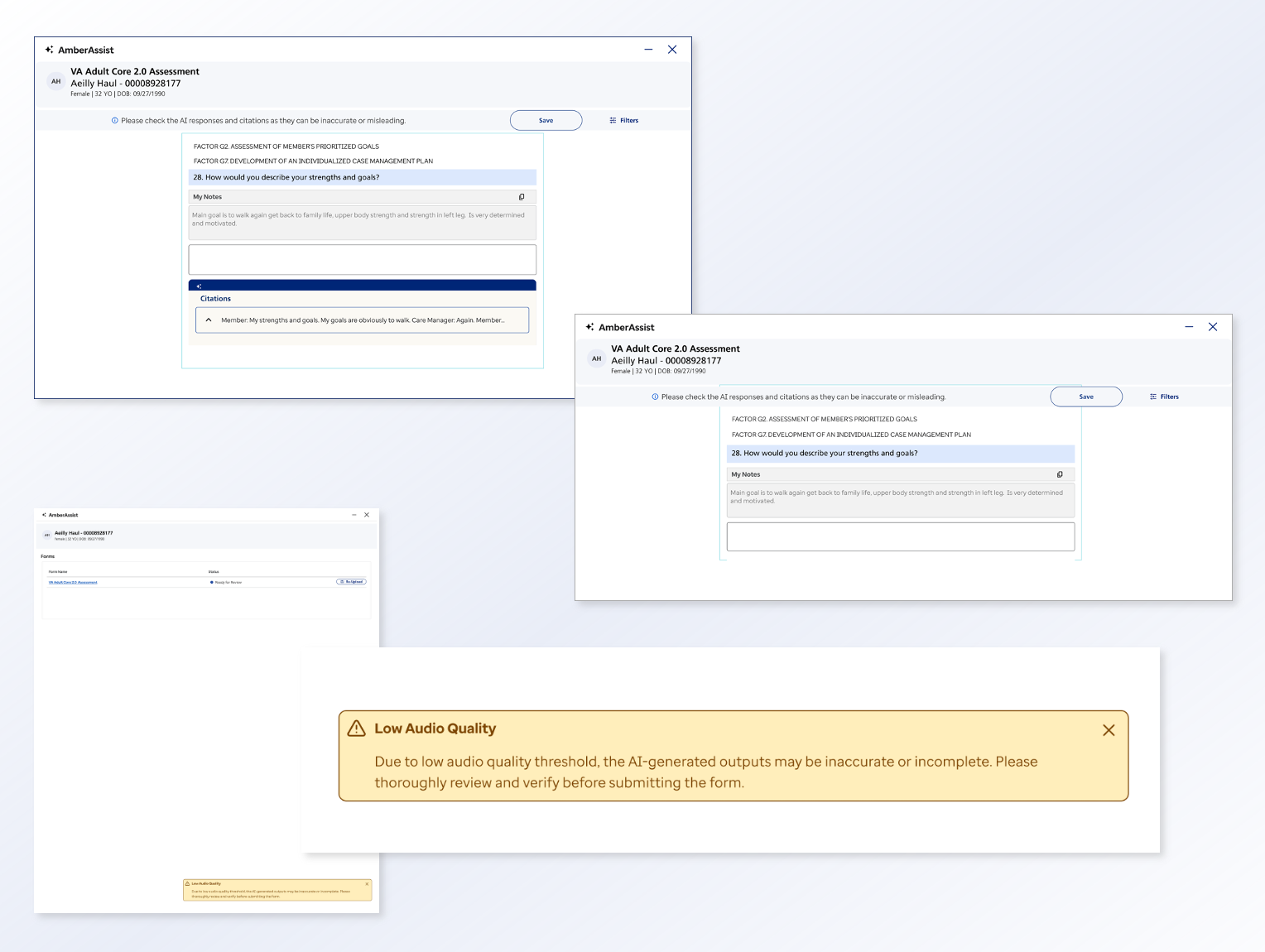
Care managers supporting Medicaid populations must synthesize fragmented member information while completing lengthy health risk assessments under regulatory constraints. Manual documentation processes are time‑consuming and prone to omission, increasing cognitive burden and reducing time available for meaningful member interaction.
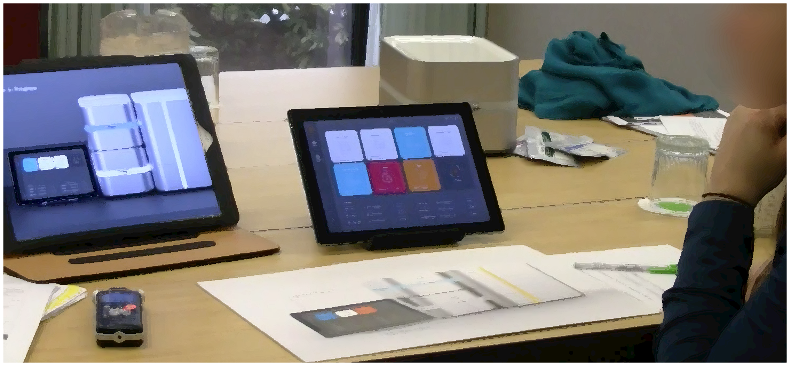
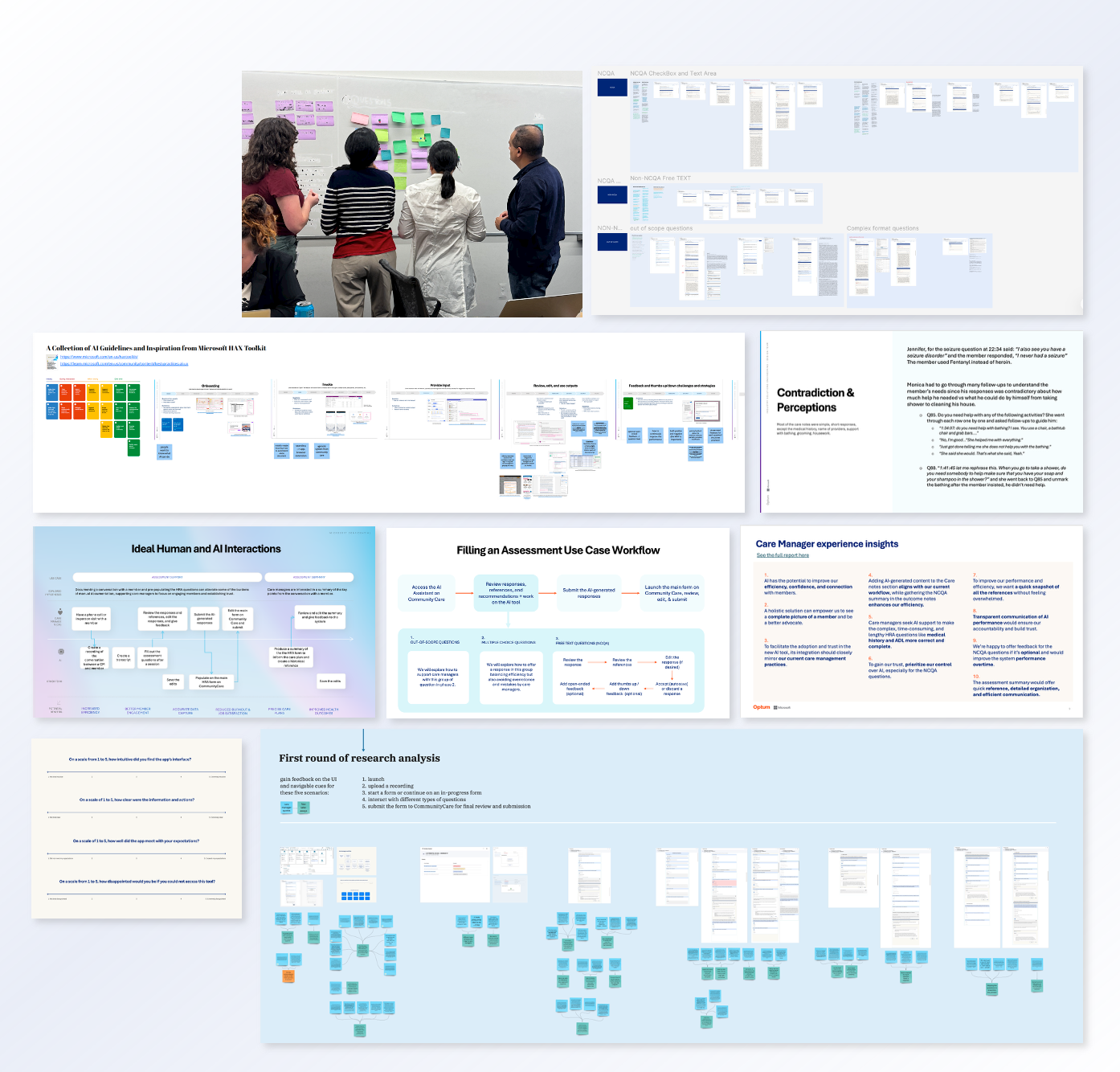
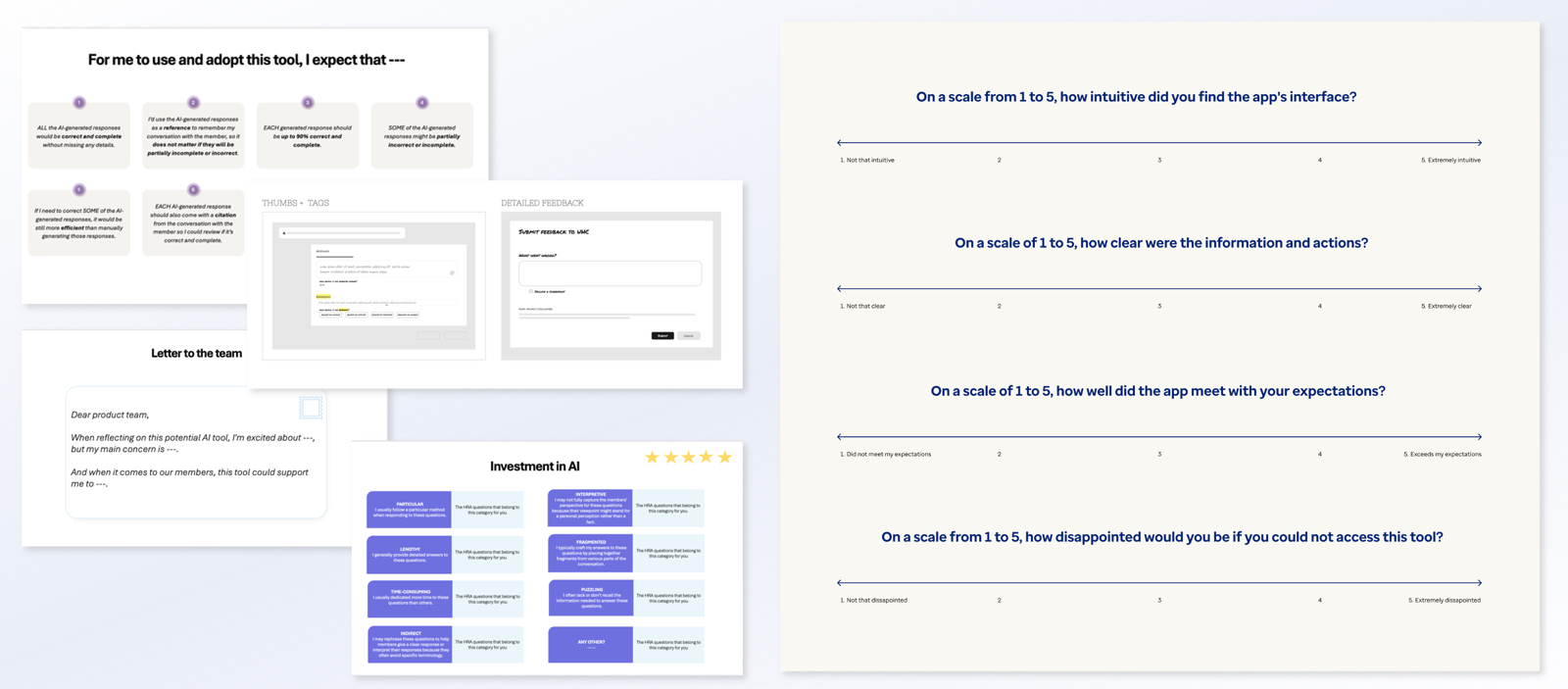
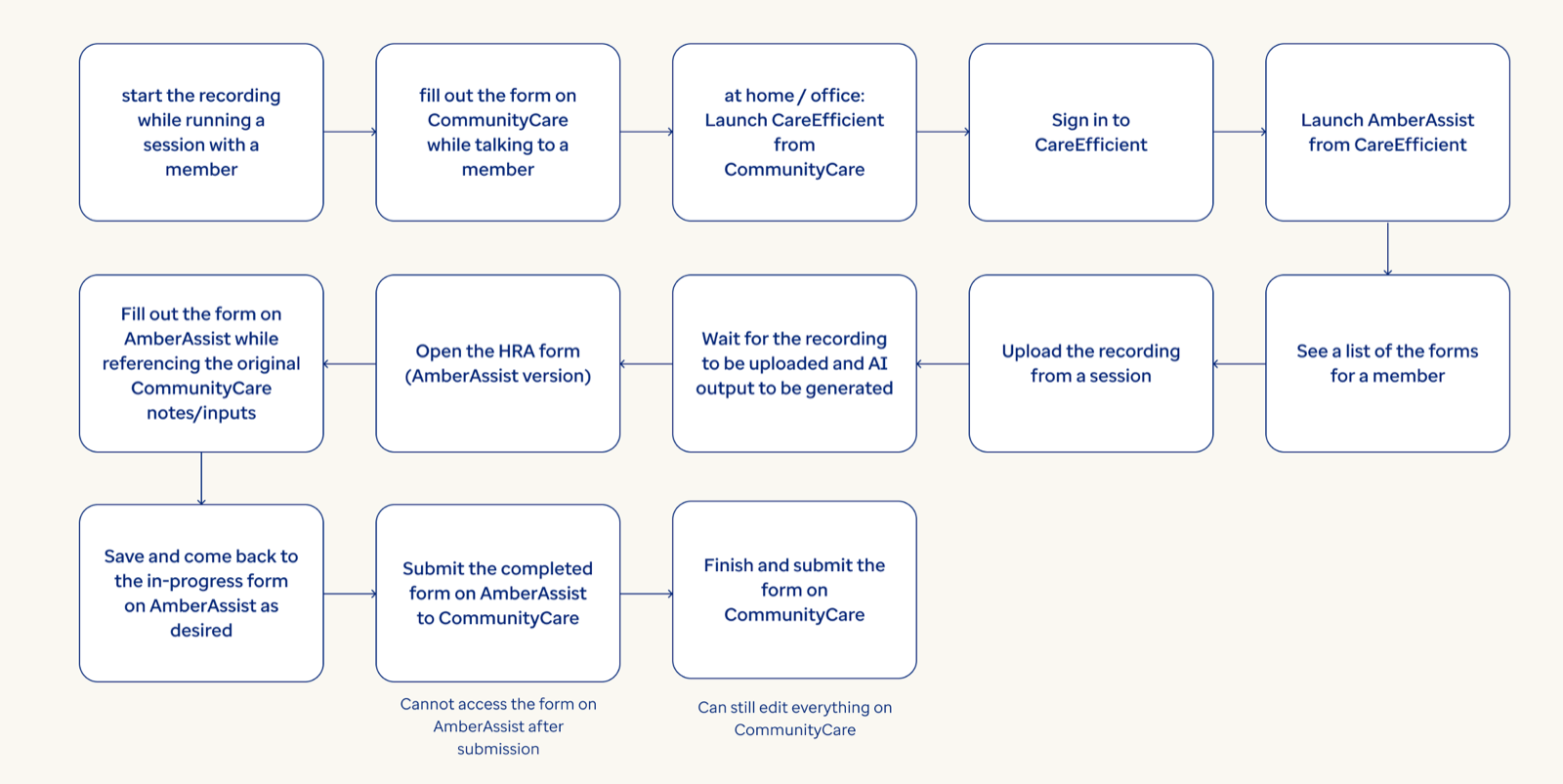
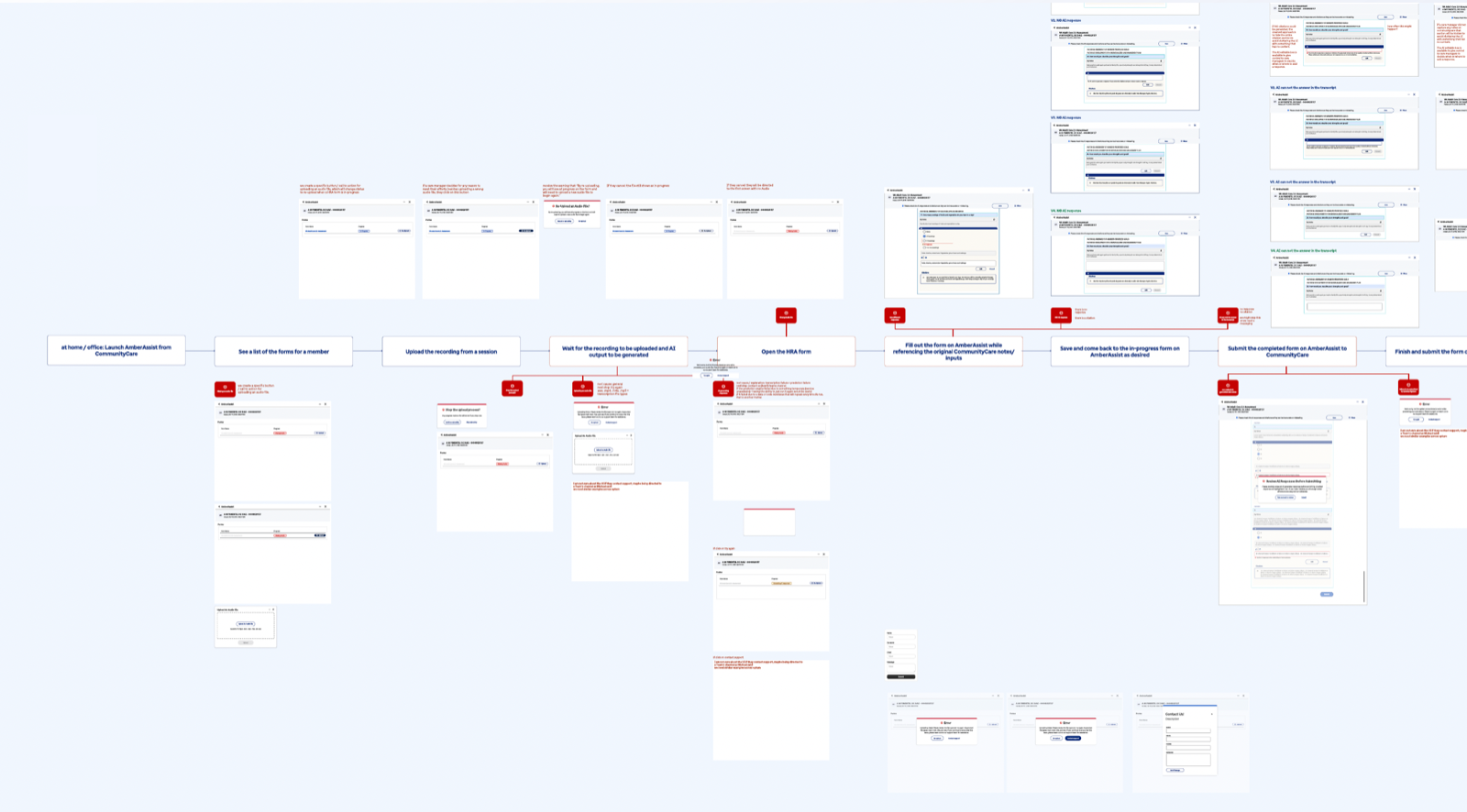
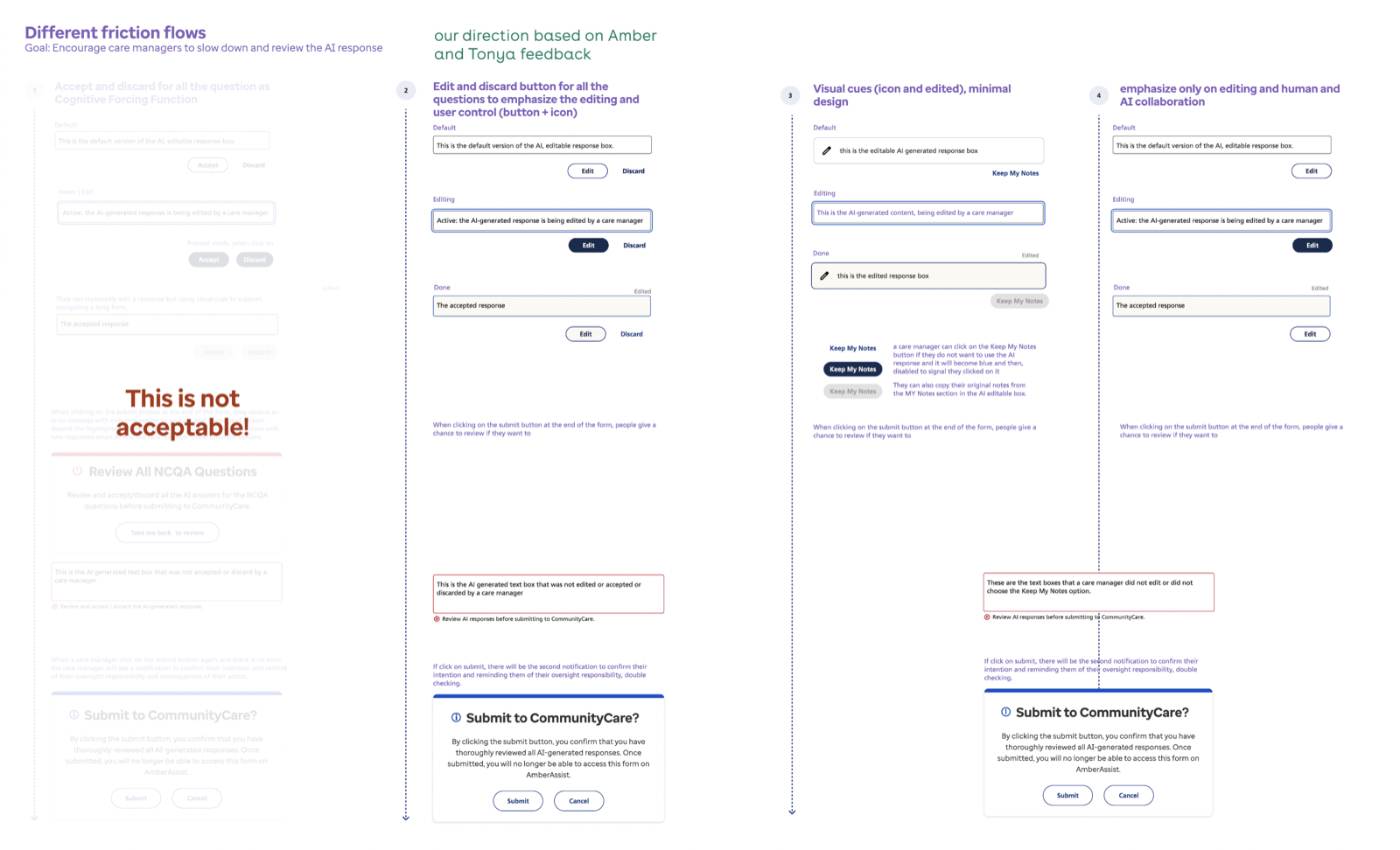
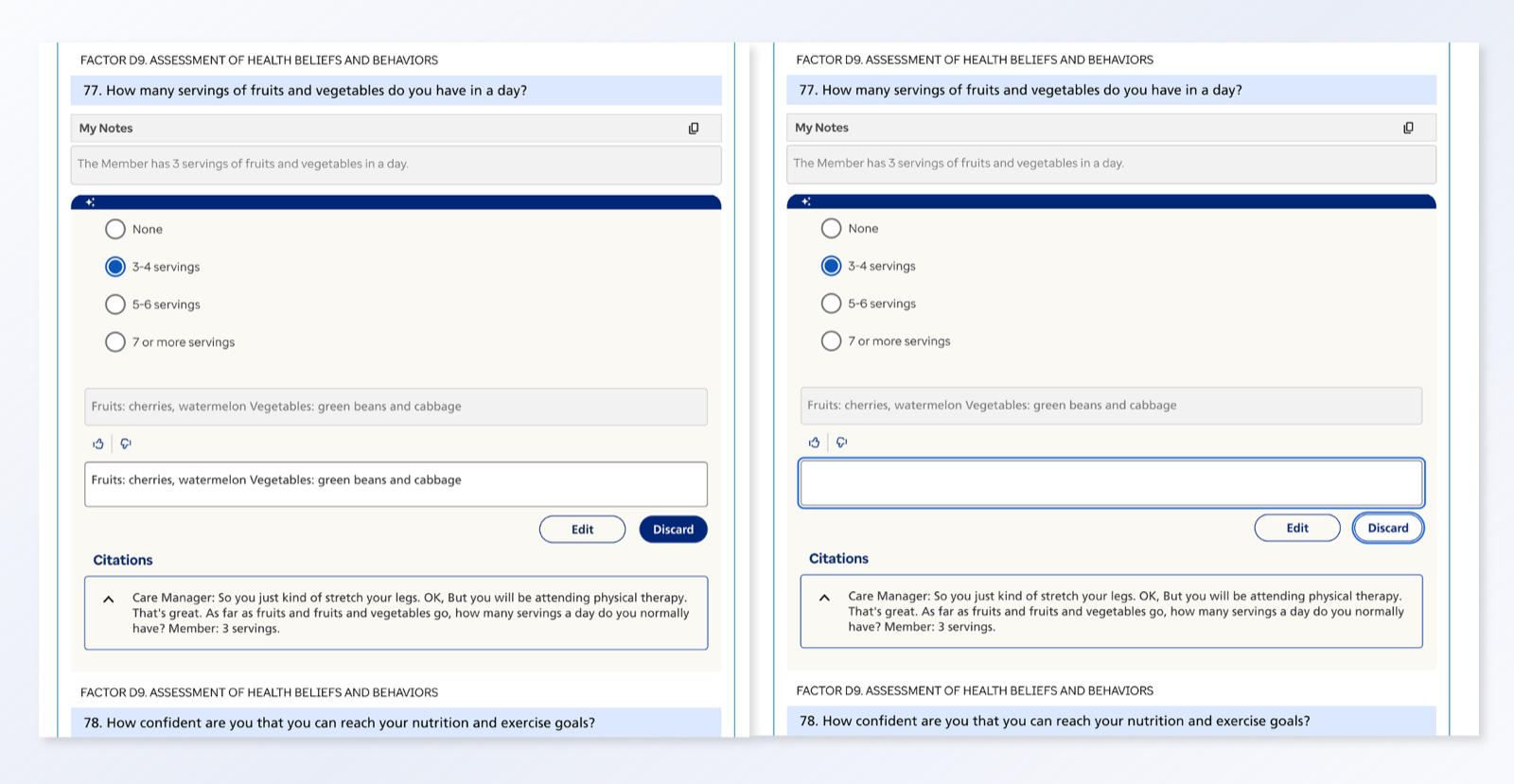
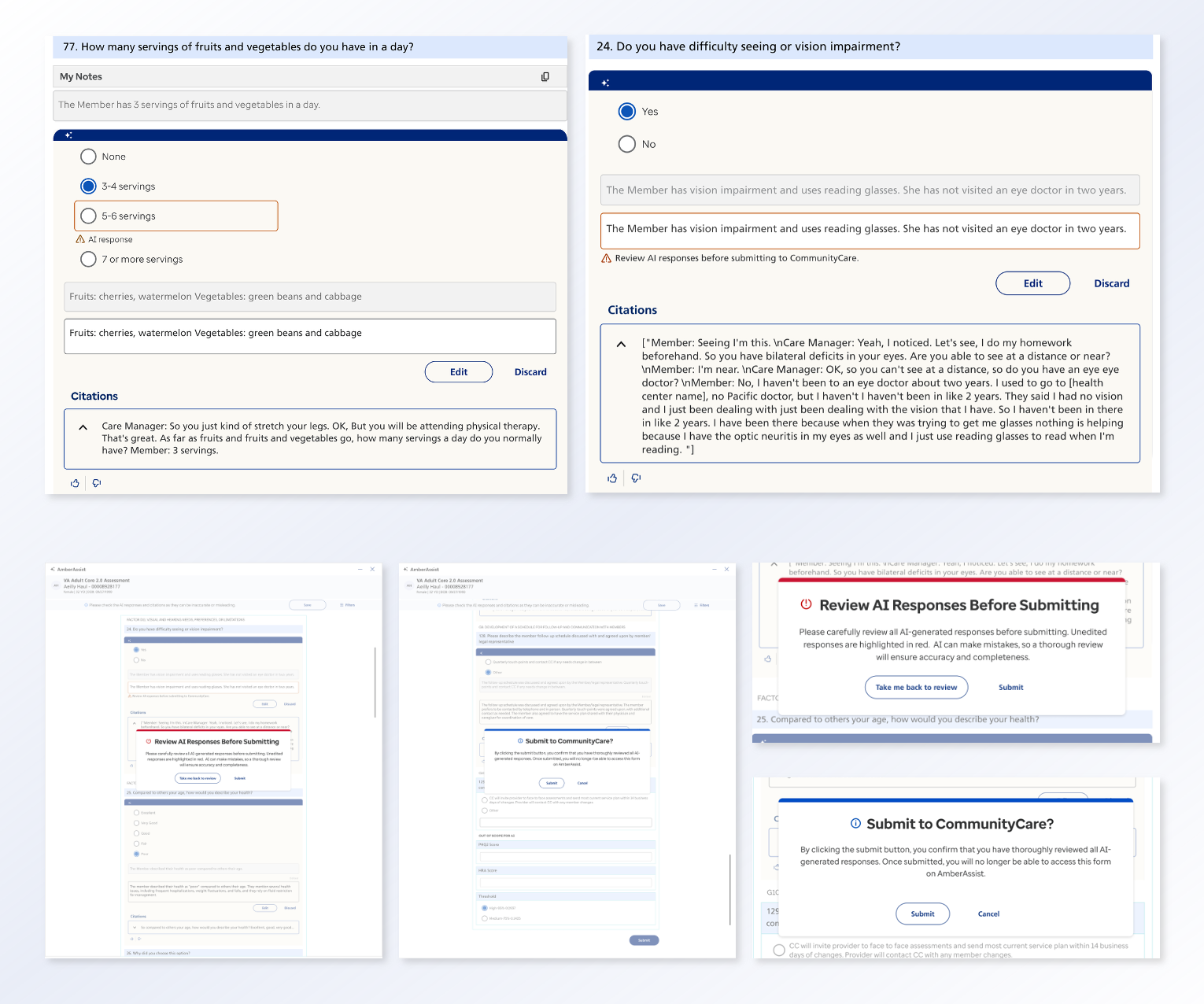
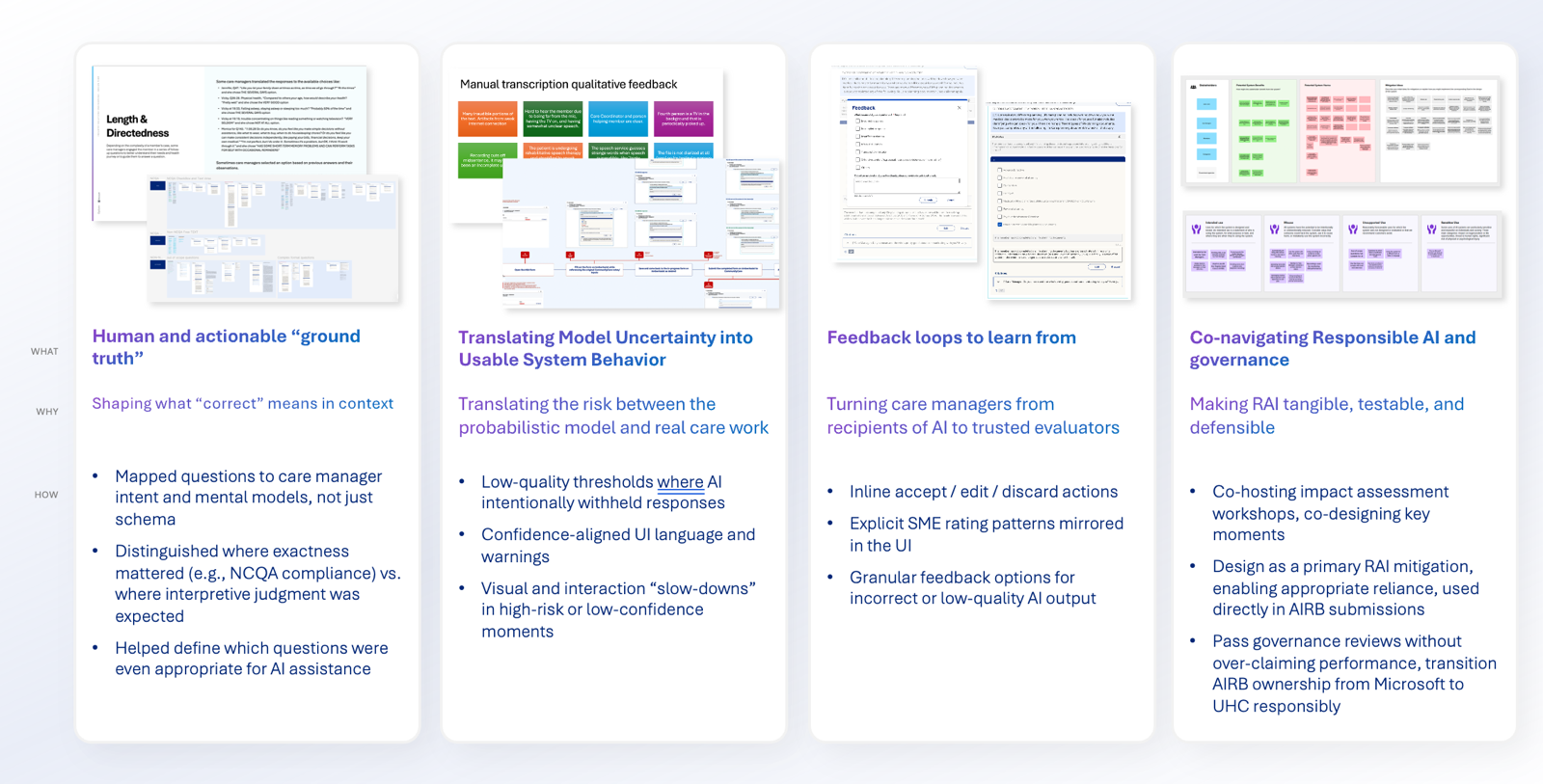
I led a design effort in close collaboration with care managers, data scientists, product, and engineering to design an MVP to support assessment completion. The system consolidates historical member data and pre‑populates assessment responses for human review, enabling care managers to edit, accept, or discard AI‑generated content with appropriate transparency. Grounded in RAI principles, design decisions framed AI as decision support rather than decision replacement, protecting areas requiring human judgment. Front‑end interactions were intentionally connected to transcription quality, data readiness, and compliance expectations to support appropriate reliance and informed oversight.
Design choices encouraged vigilance and accountability while improving workflow efficiency. Following the MVP, experience patterns are now being replicated across additional assessment forms and expanded to other state programs, enabling scalable, human‑AI collaboration in Medicaid care management nationwide.
Source: Adobe Stock
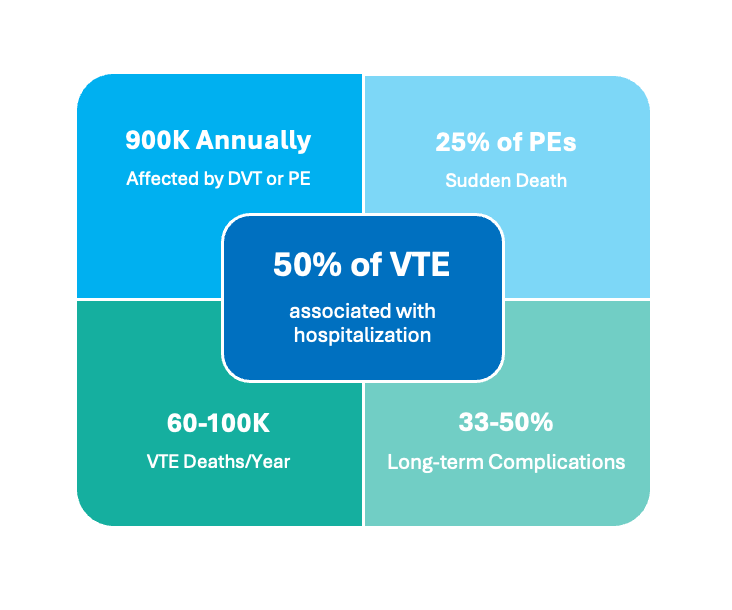
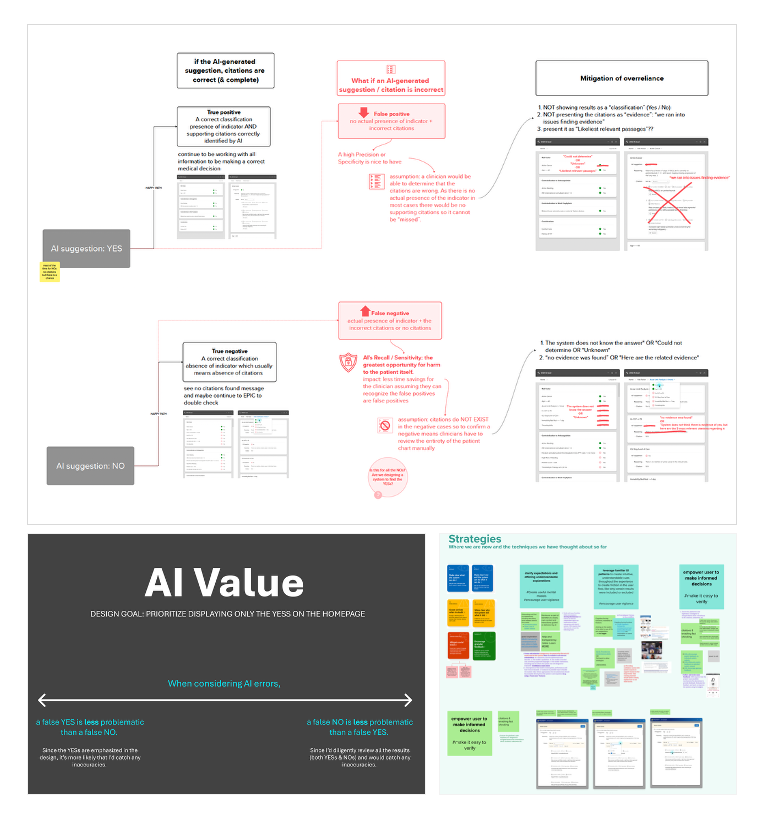
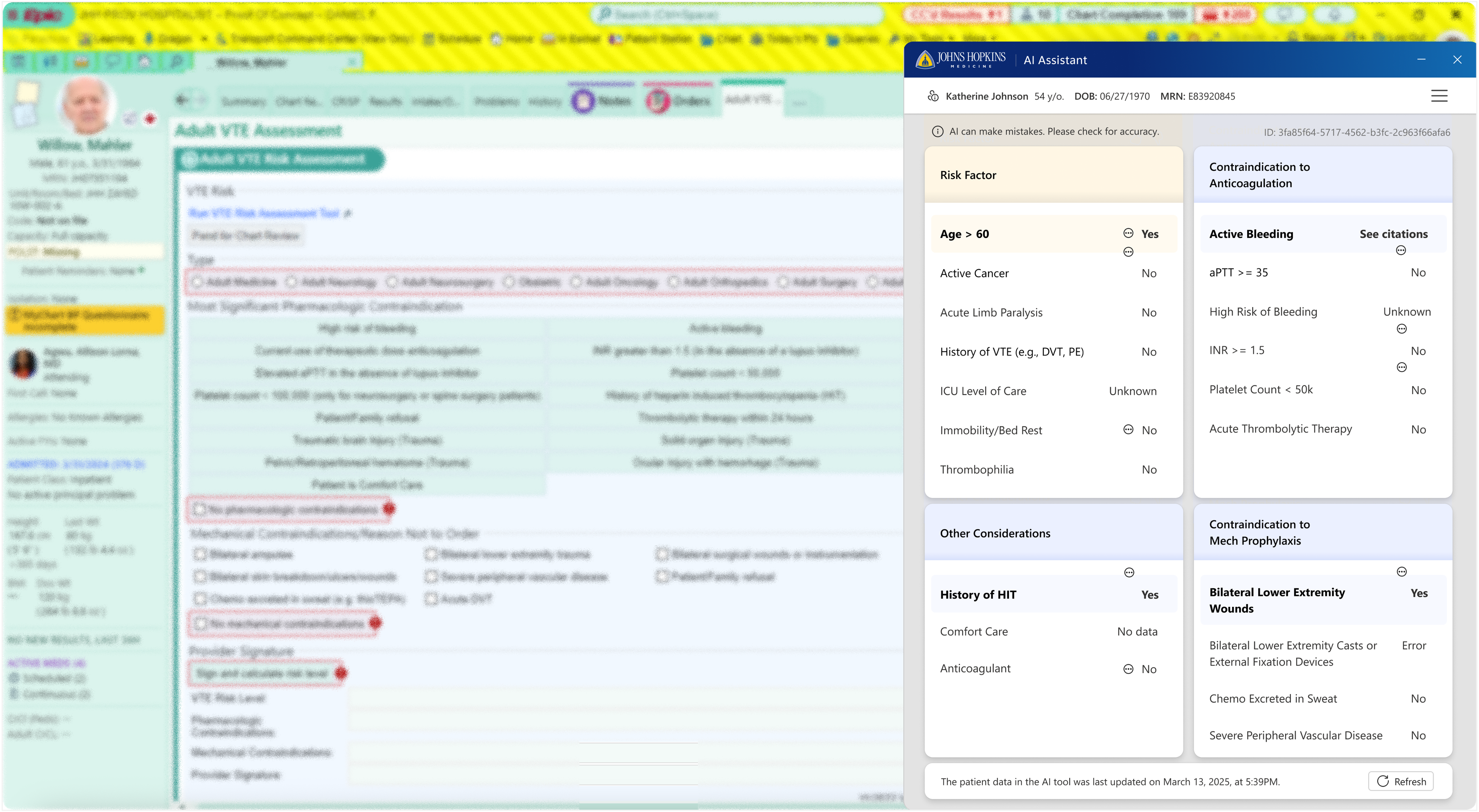
Clinicians must assess blood clots risk using fragmented, unstructured patient data under severe time pressure. Existing tools added friction and were often bypassed, forcing physicians to rely on memory and heuristics, introducing variability, inaccuracy, and risks, especially in complex cases.
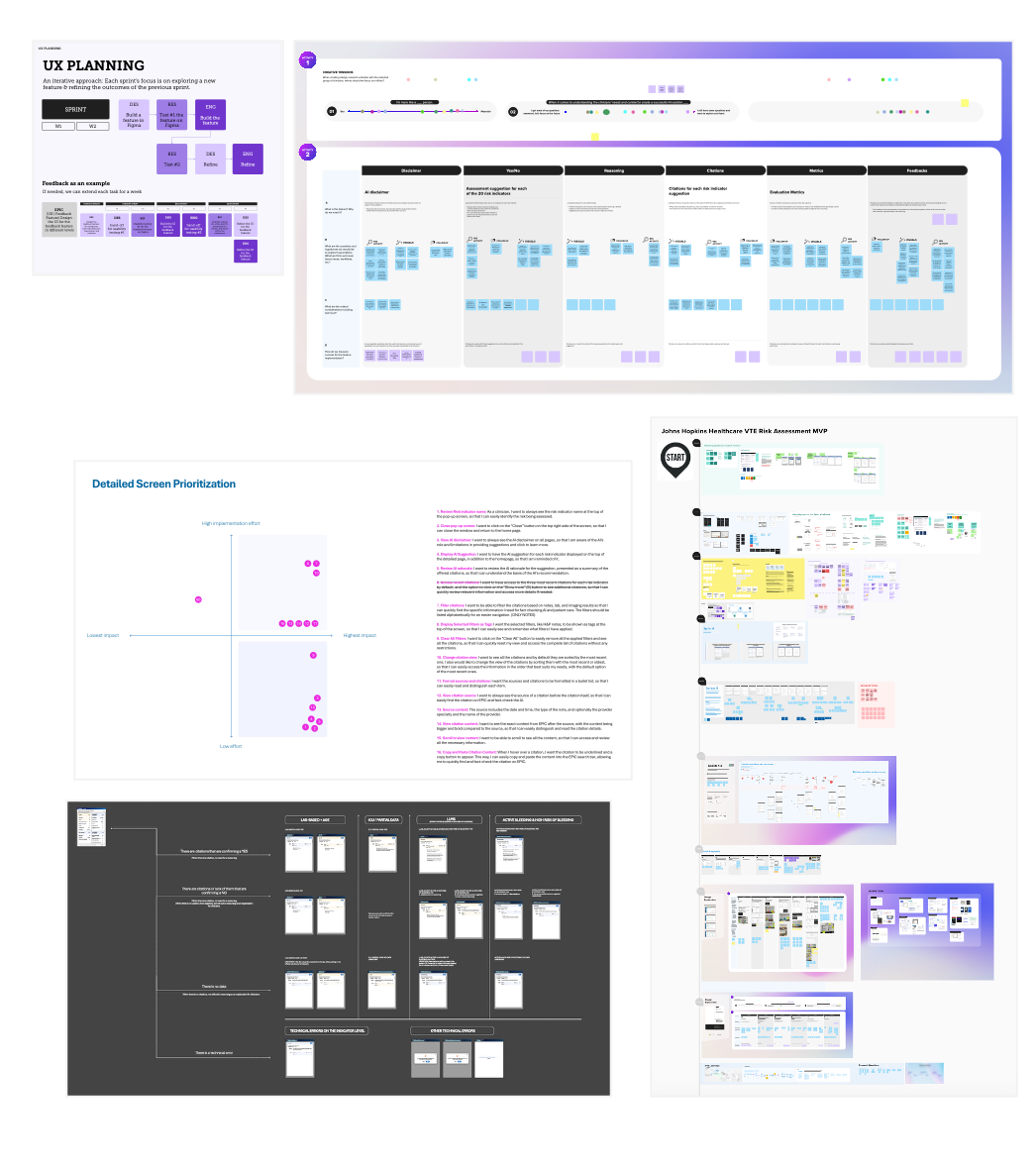
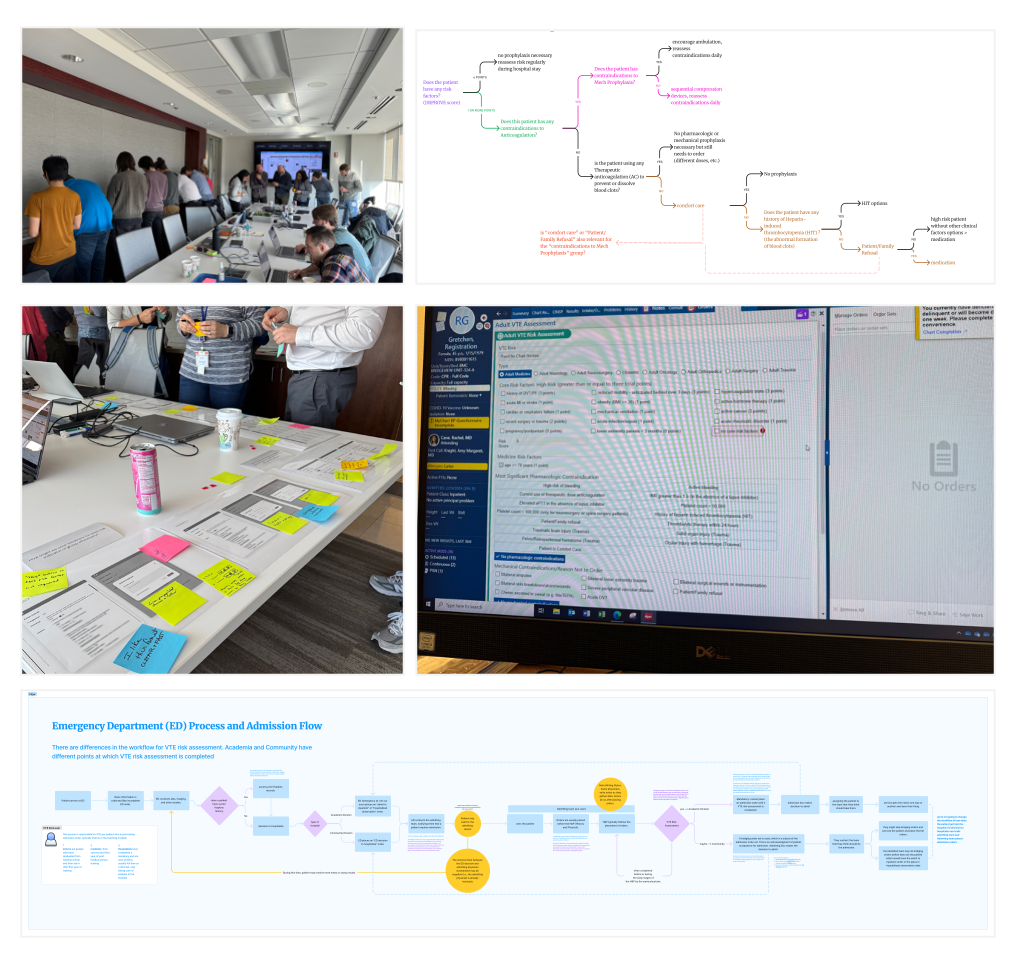
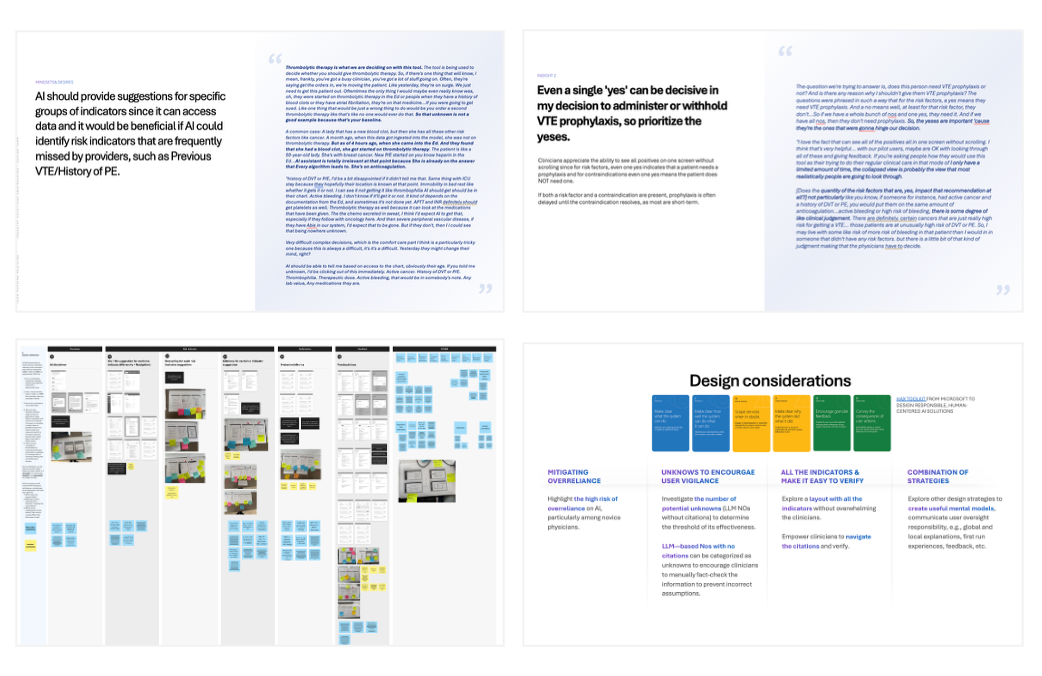
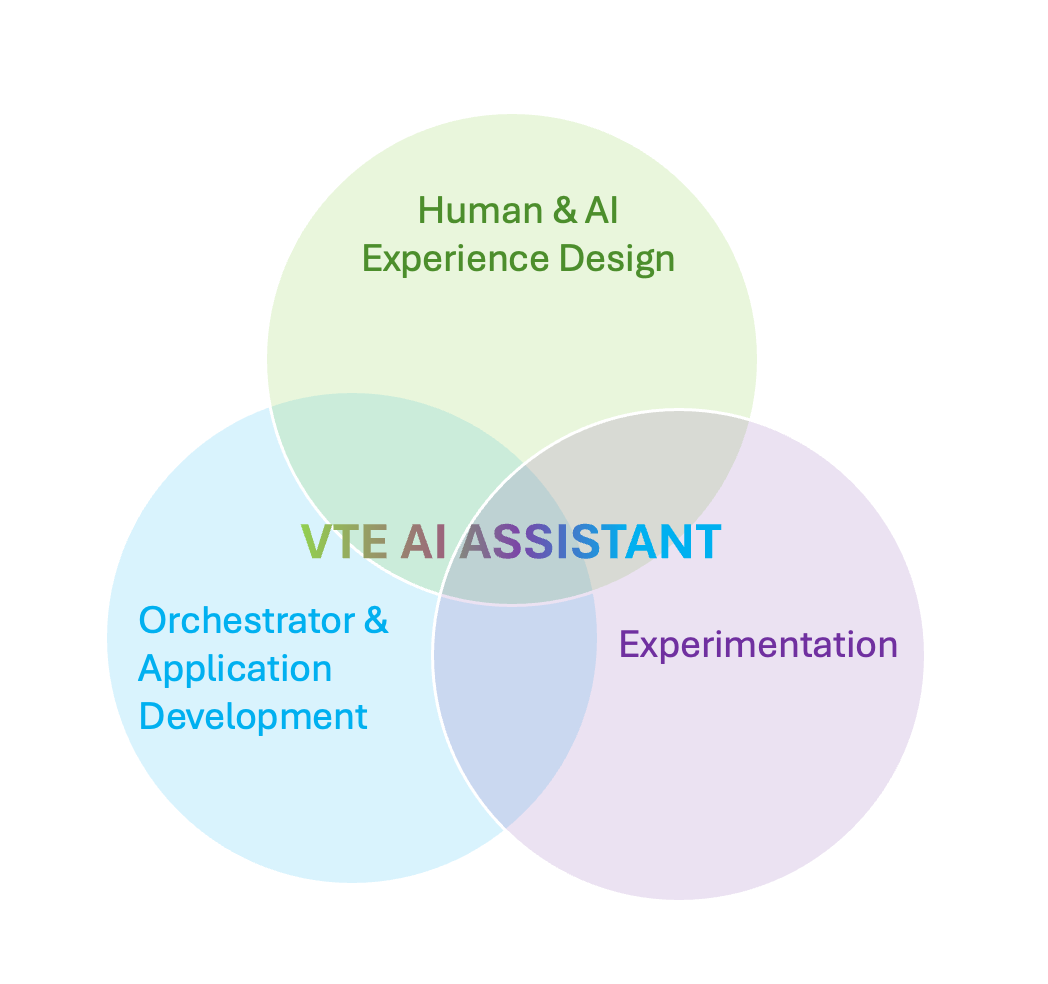
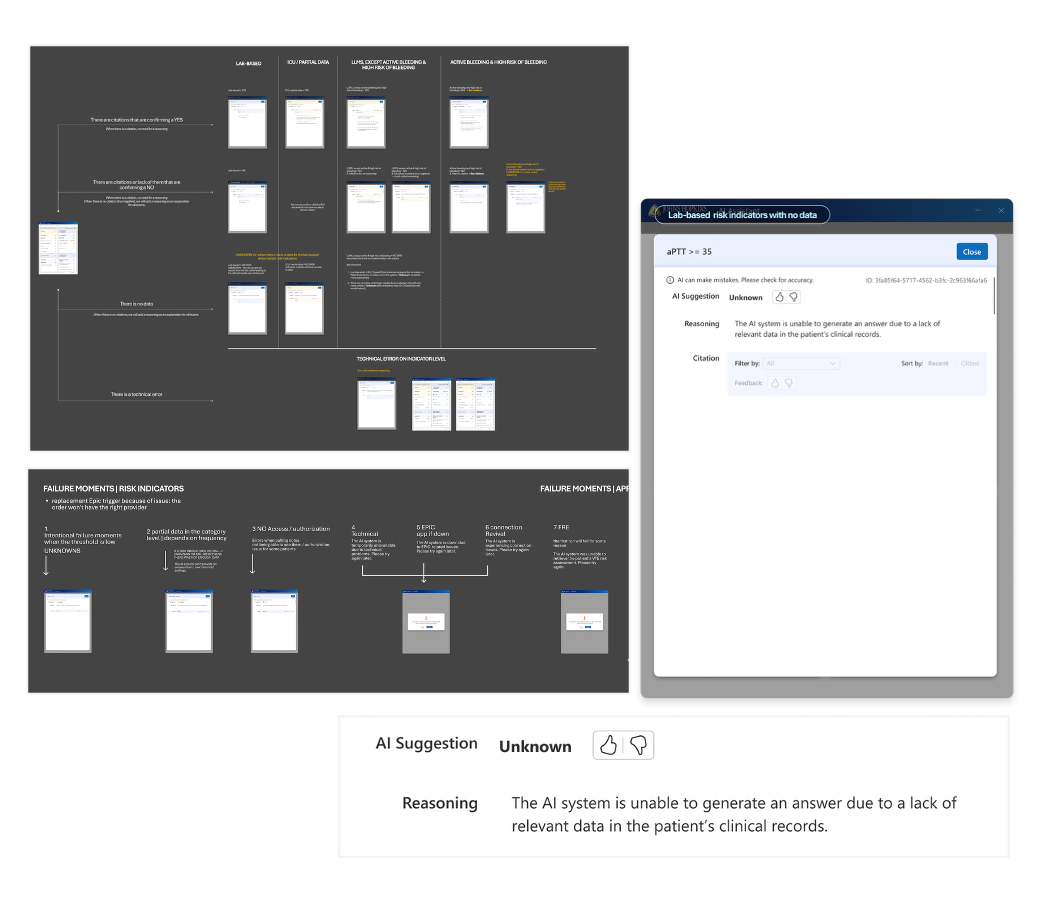
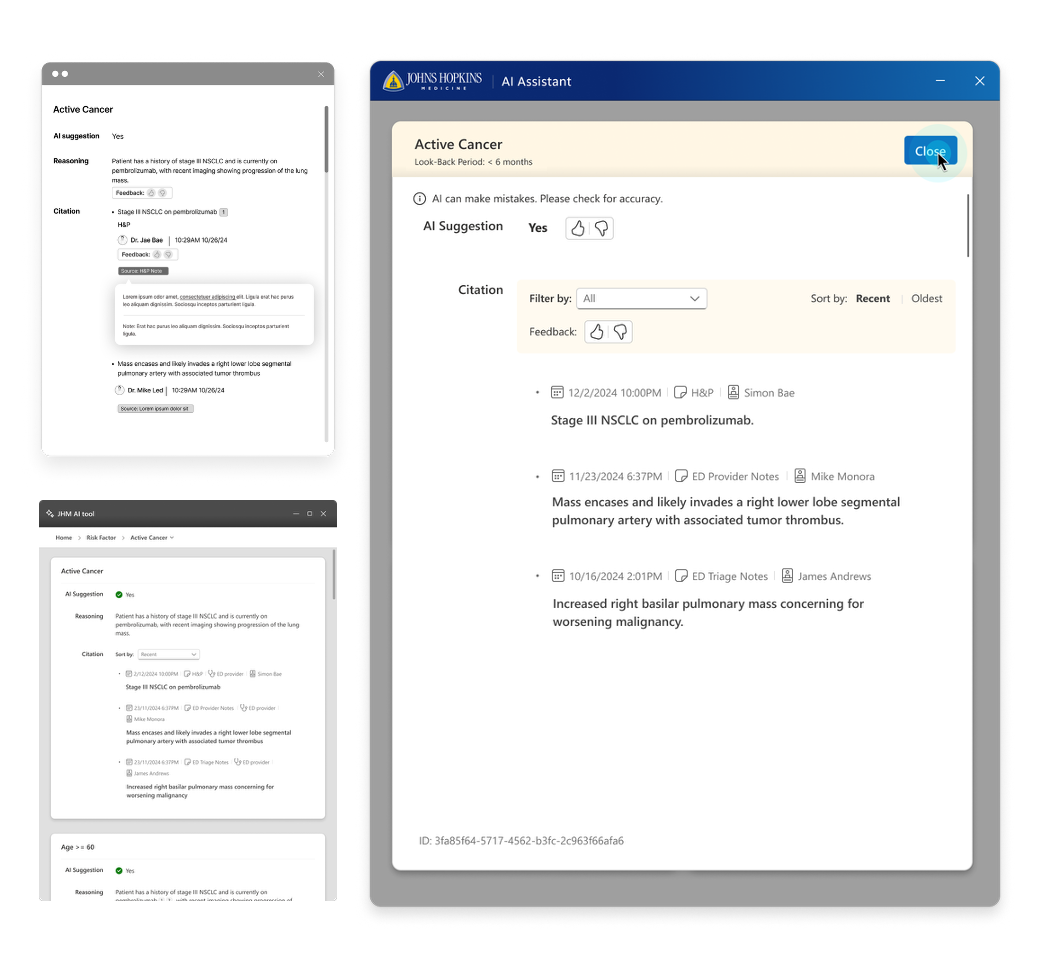
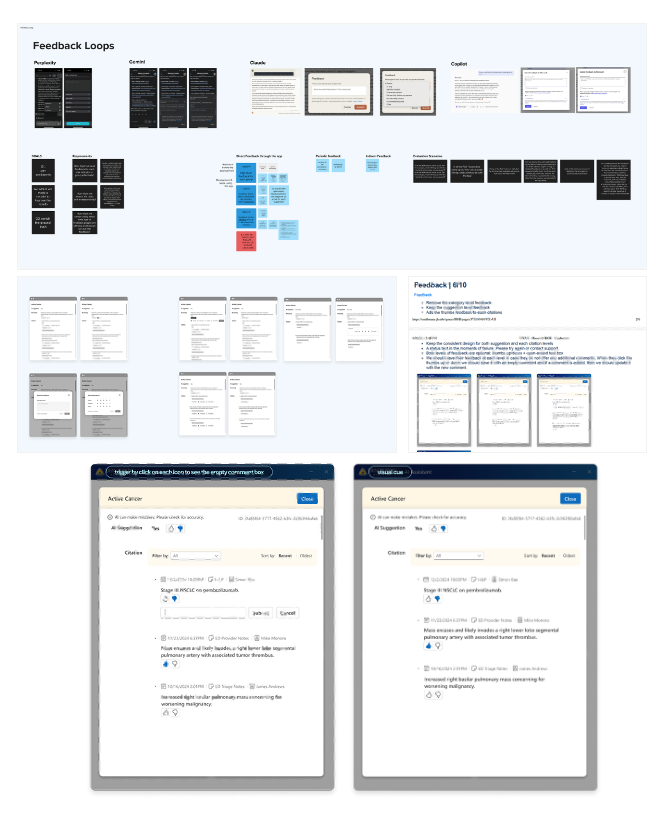
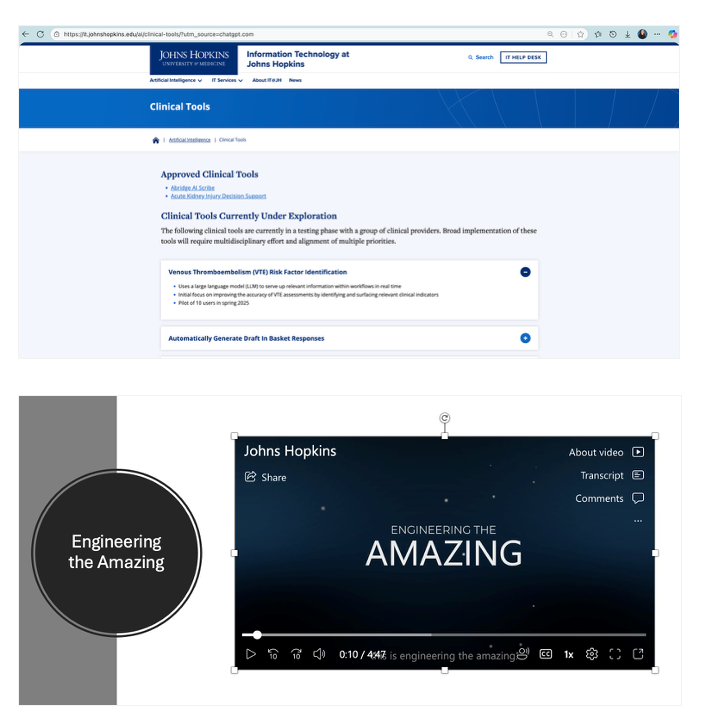
Through a multidisciplinary, participatory design process, I partnered closely with physicians, data science, product, and engineering to design and deliver an AI‑assisted MVP that augments, not automates, clinical judgment. The system synthesizes and prioritizes patient‑specific risk signals, surfacing the most relevant context at the moment of decision‑making through reasonings and citations. Design choices intentionally preserved clinician autonomy while supporting guideline‑concordant care, ensuring the tool fit seamlessly into existing workflows and earned trust in high‑stakes clinical settings.
The MVP demonstrated value in reducing cognitive burden and improving clinician confidence, leading to scaling across the health system. The work established a repeatable model for responsible, human‑centered AI adoption in inpatient care.
Source: Adobe Stock
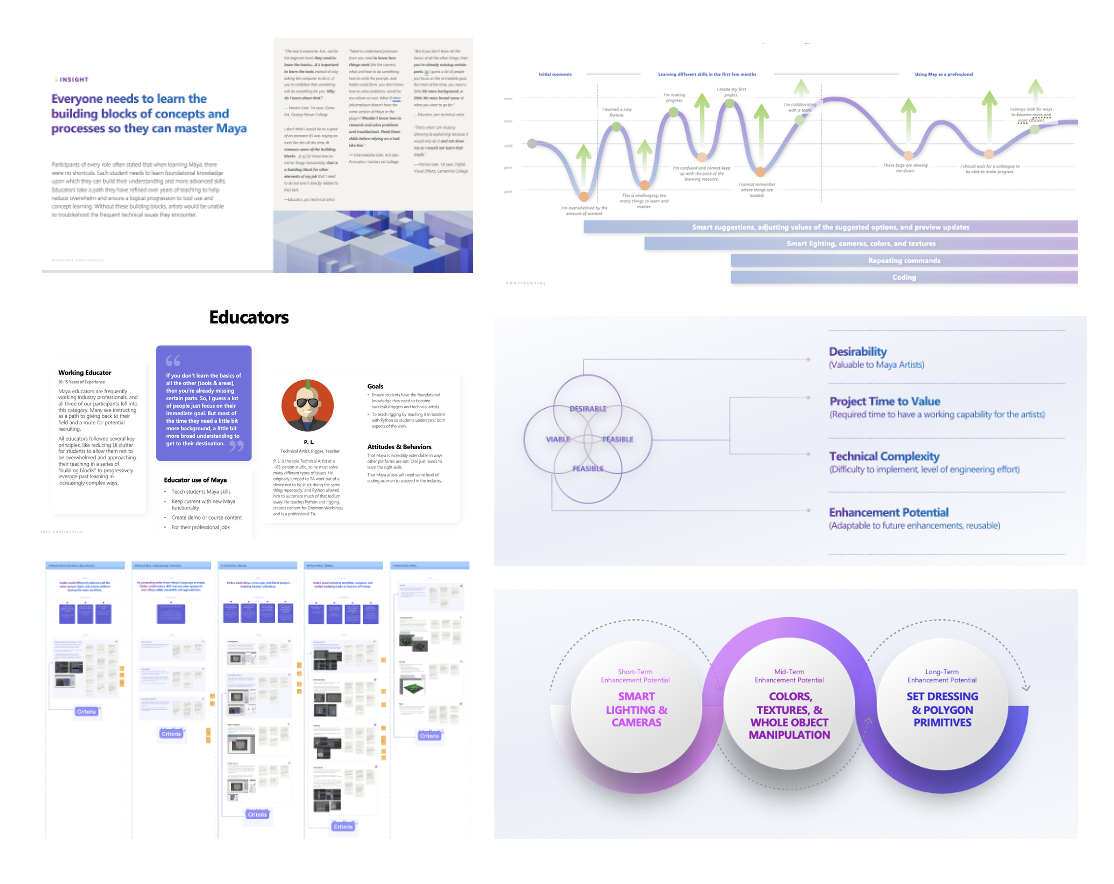
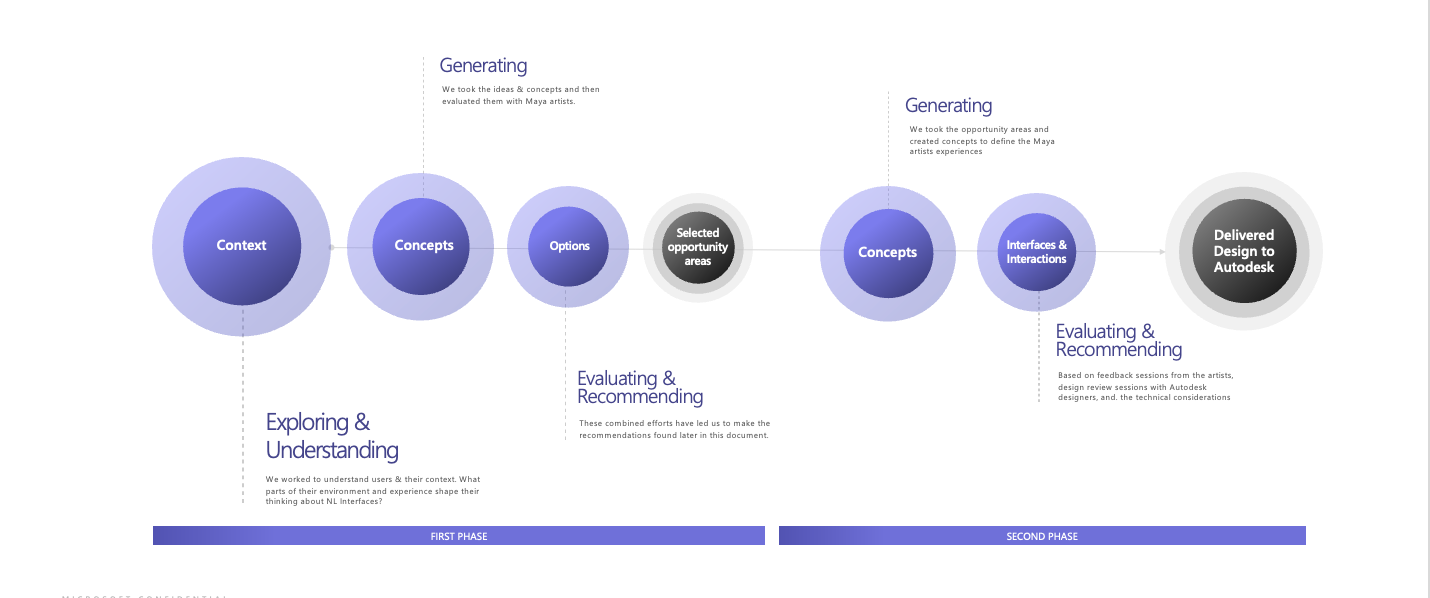
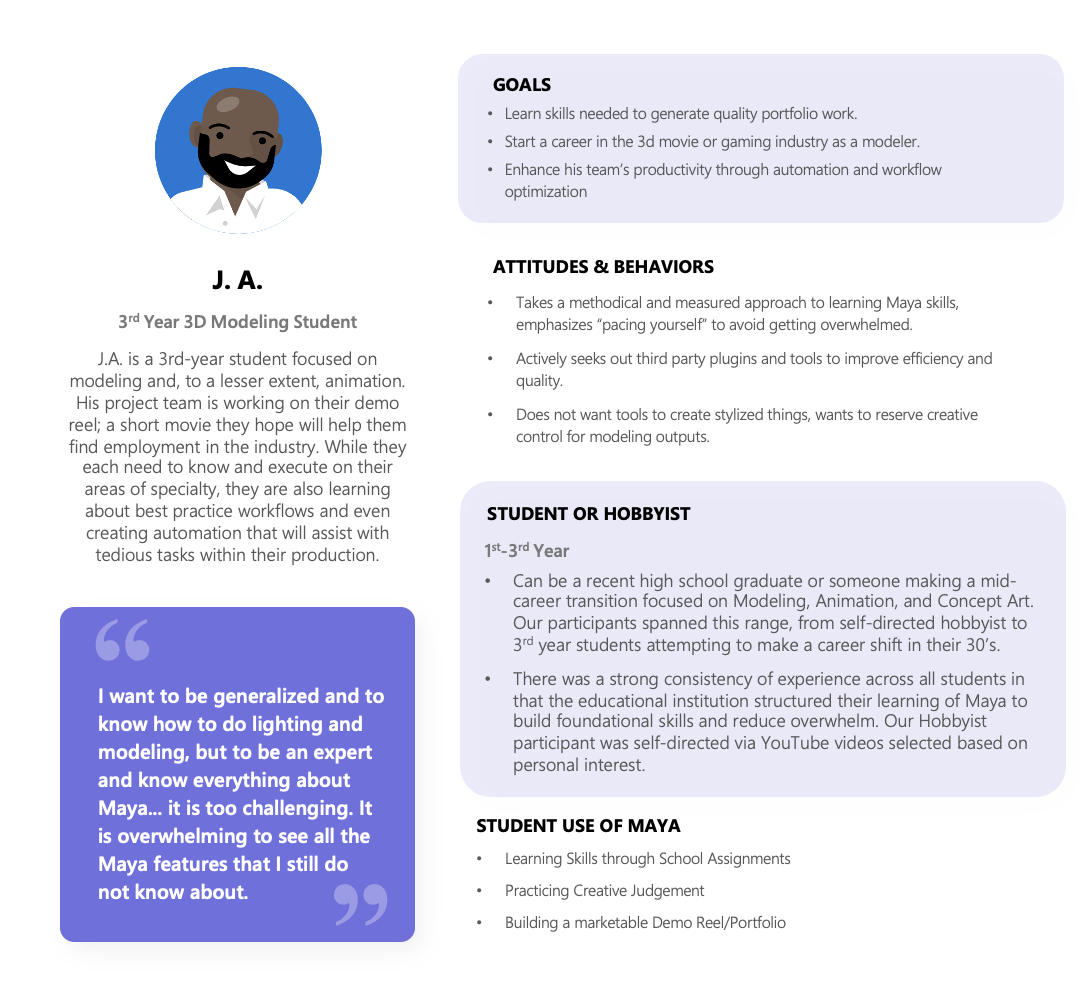
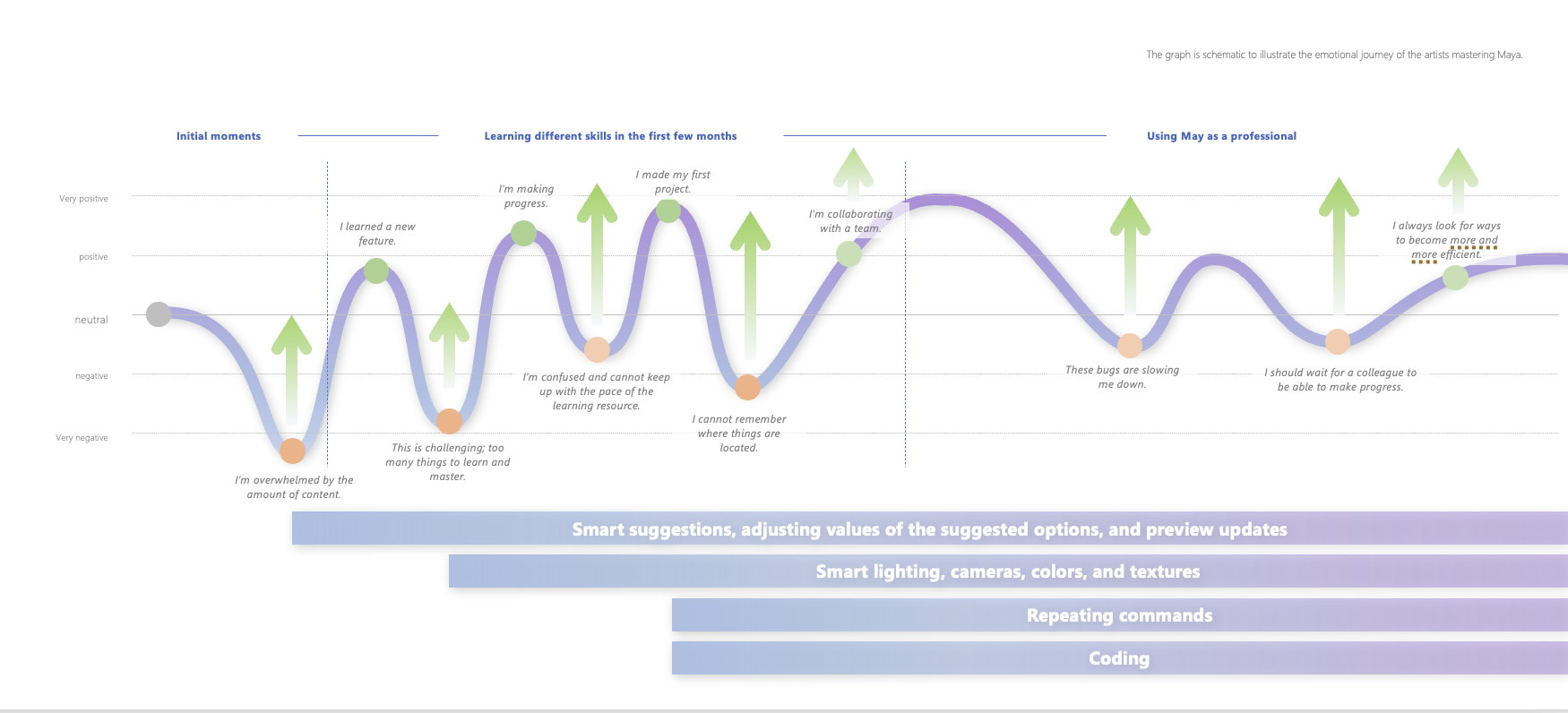
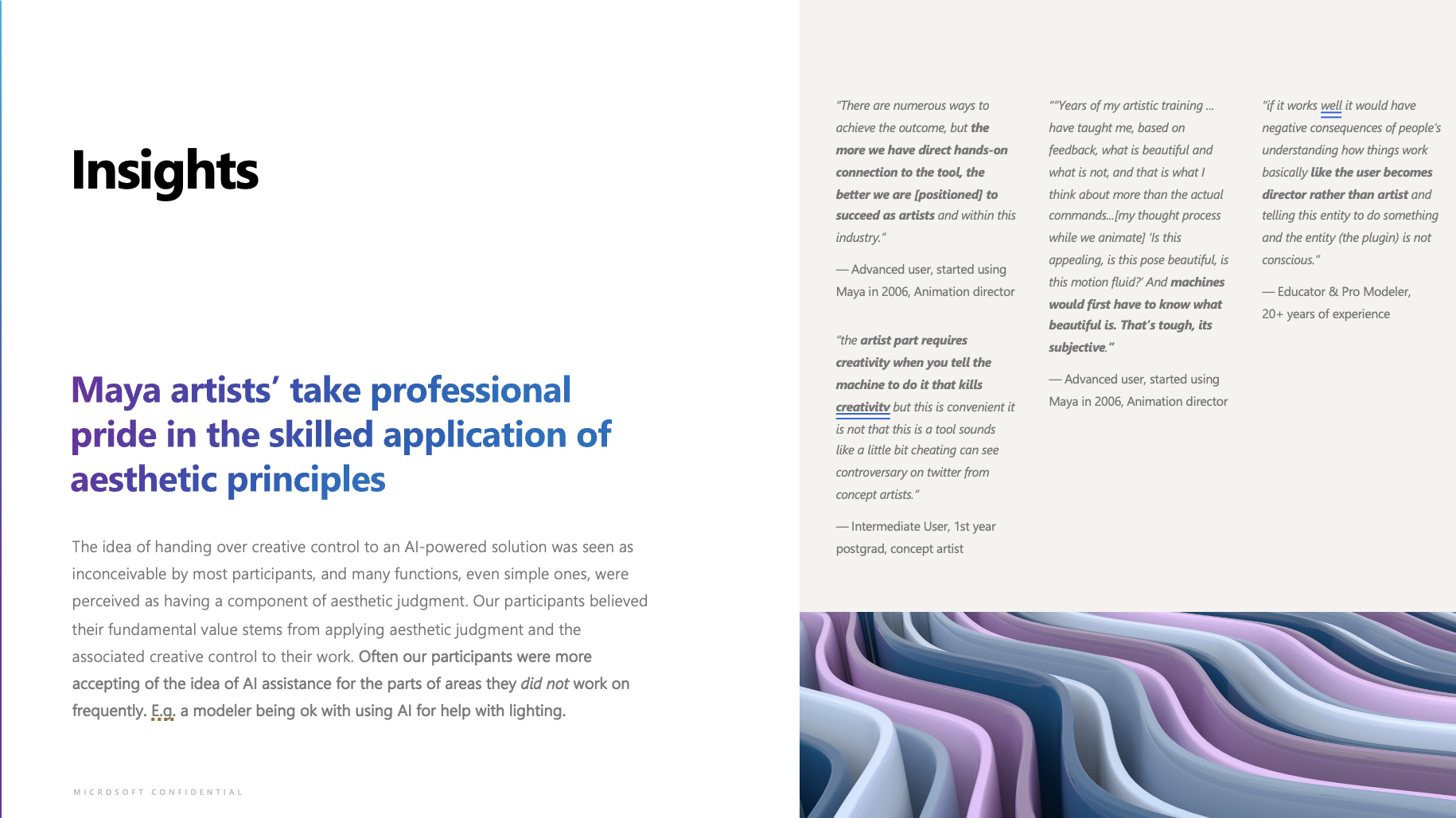
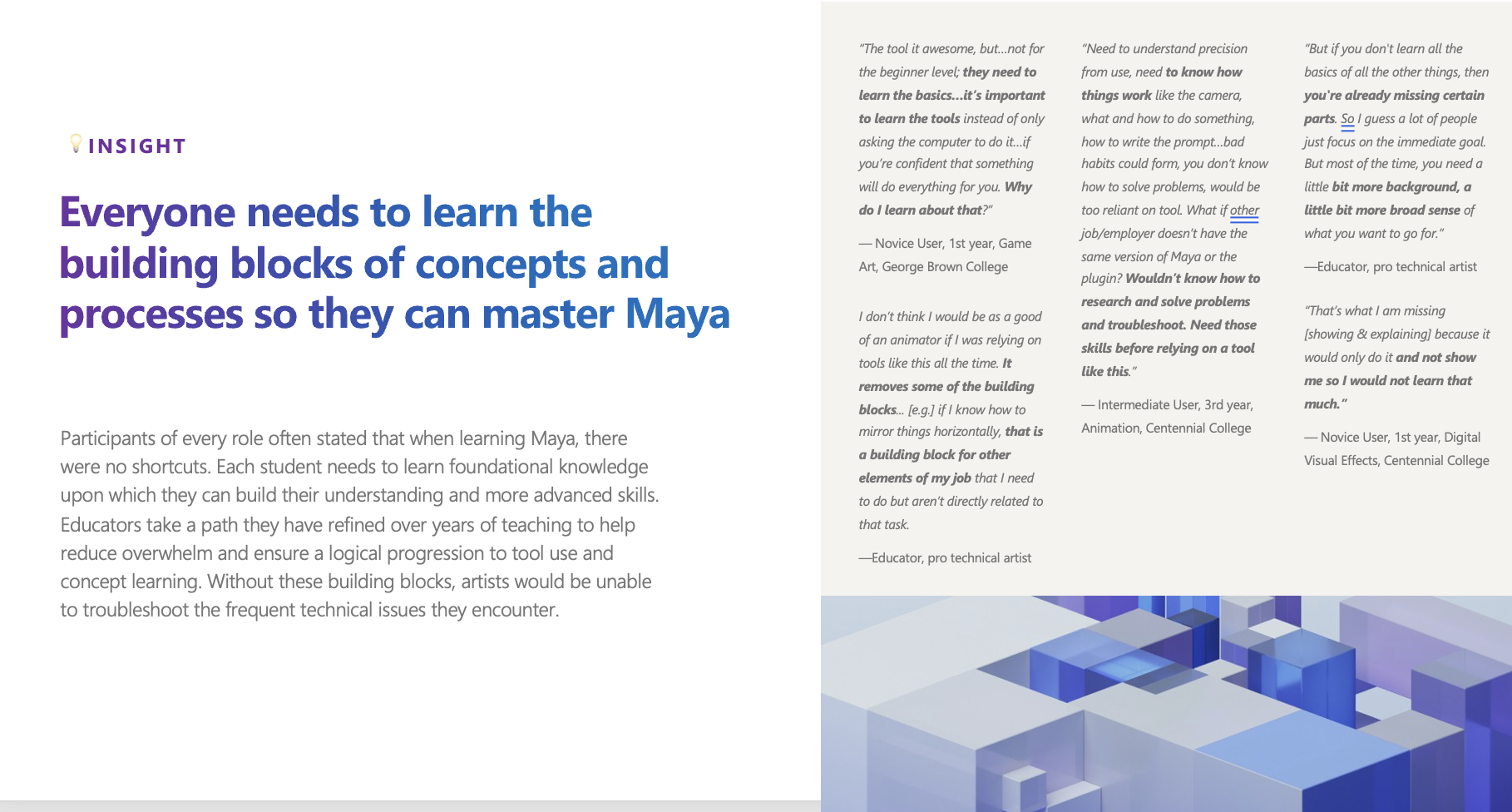
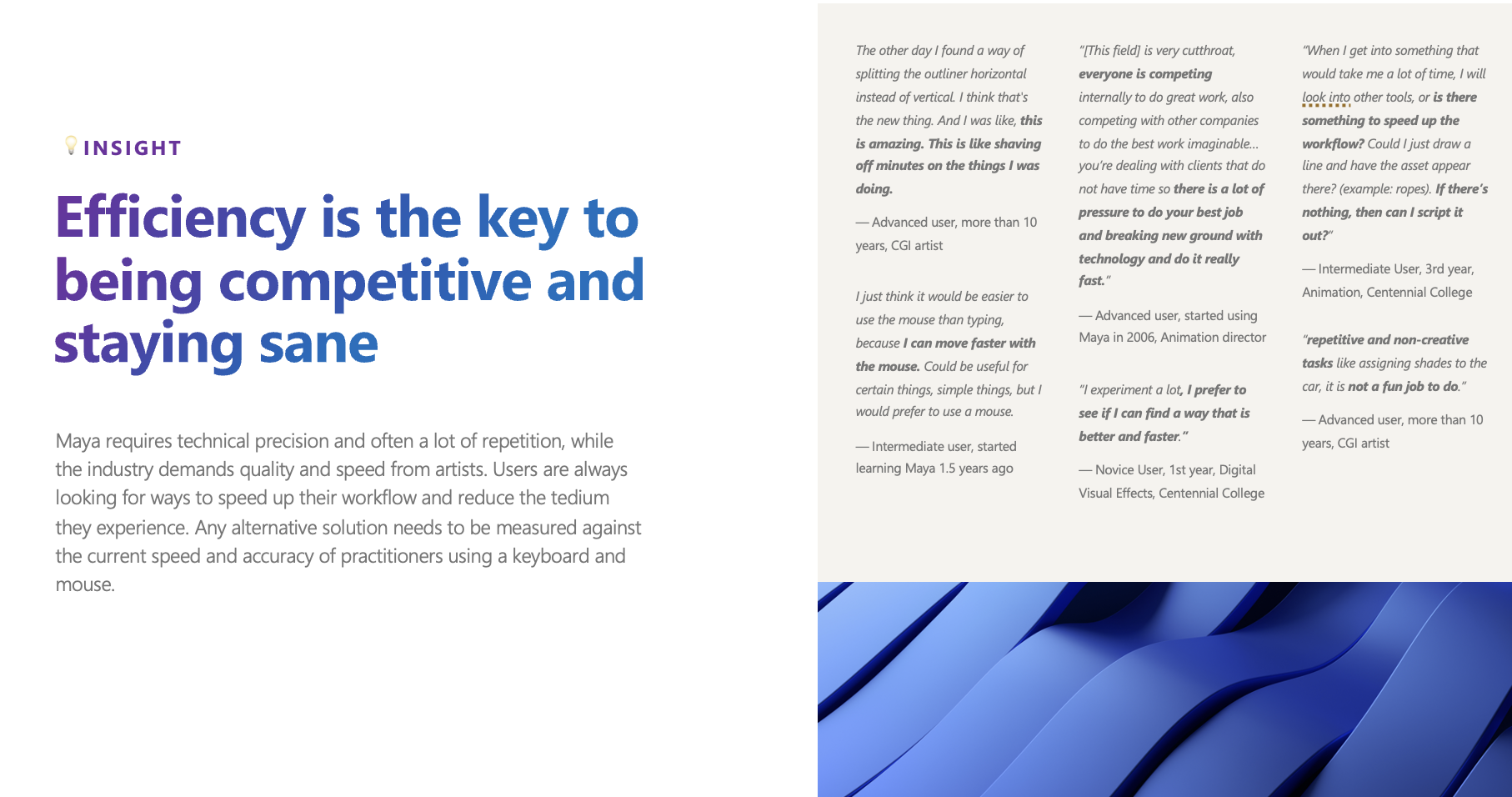
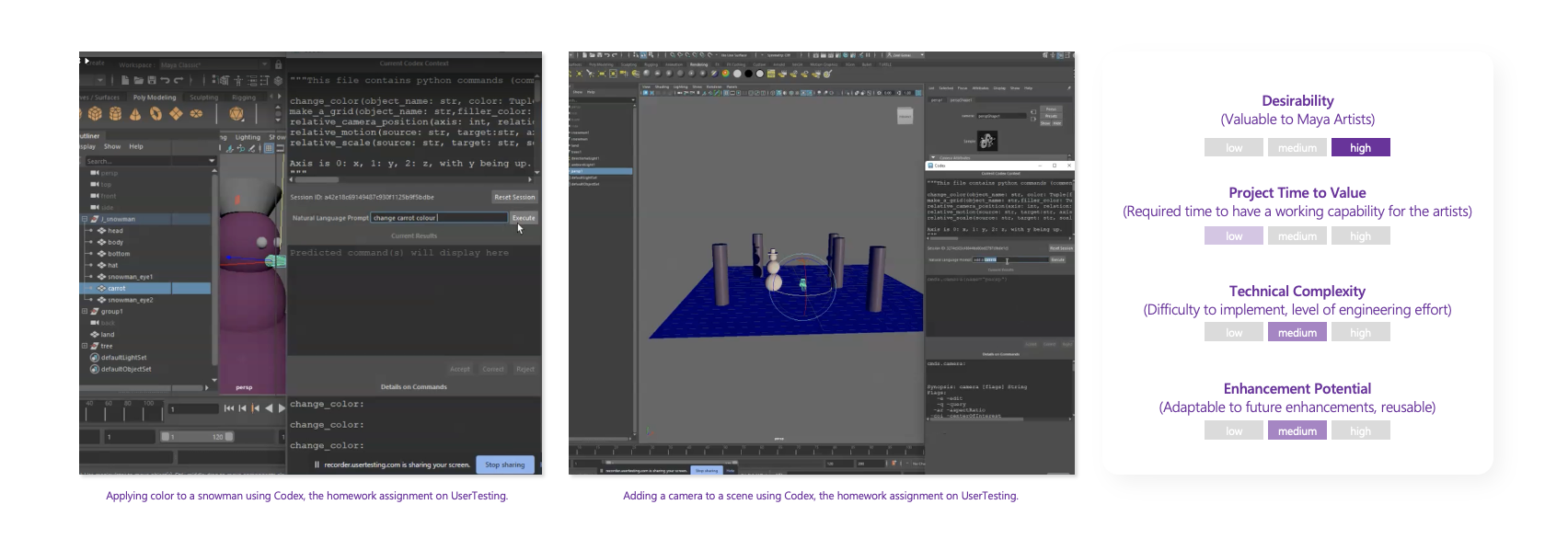
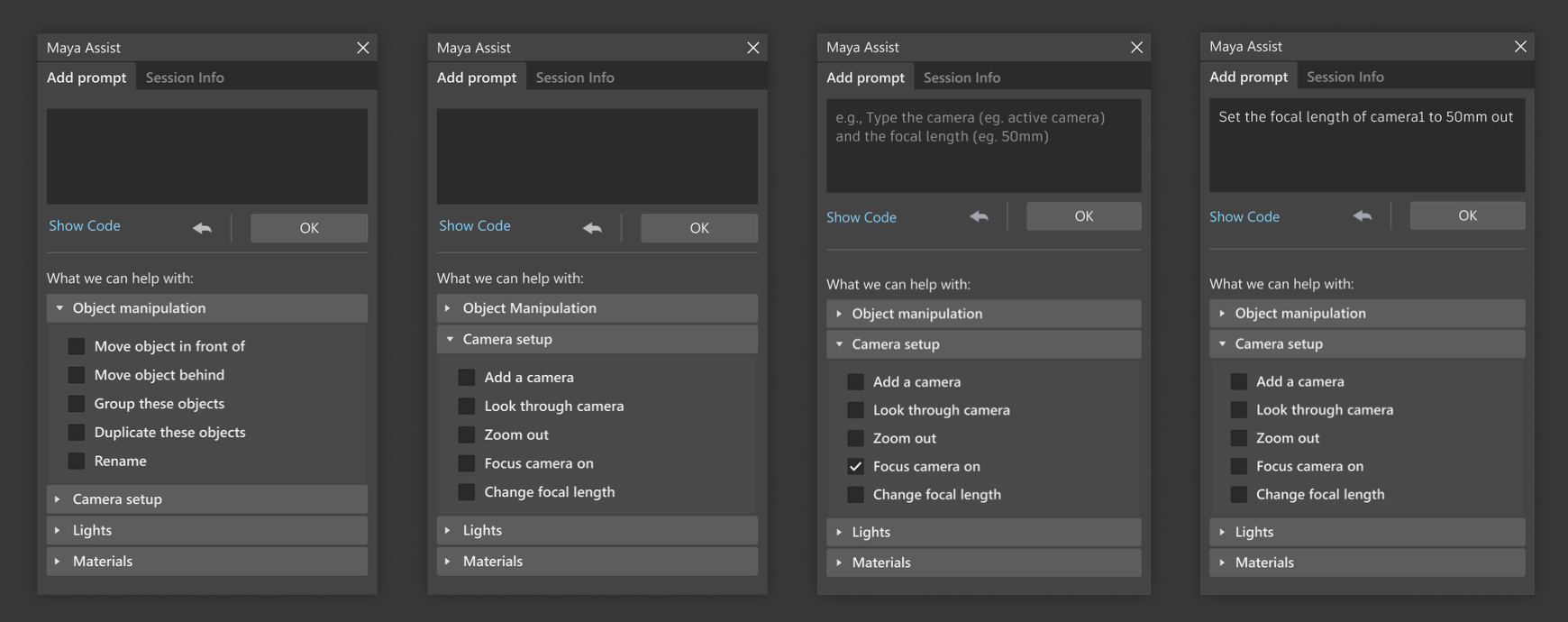
Novice and transitioning 3D artists often experience steep learning curves when using professional creative tools such as Autodesk Maya. New users frequently interrupt their workflows to consult external tutorials or forums, slowing skill development and production progress. At the same time, early research revealed resistance to AI automation, participants expressed concern that handing over creative control could undermine artistic judgment, which they viewed as core to their professional value.
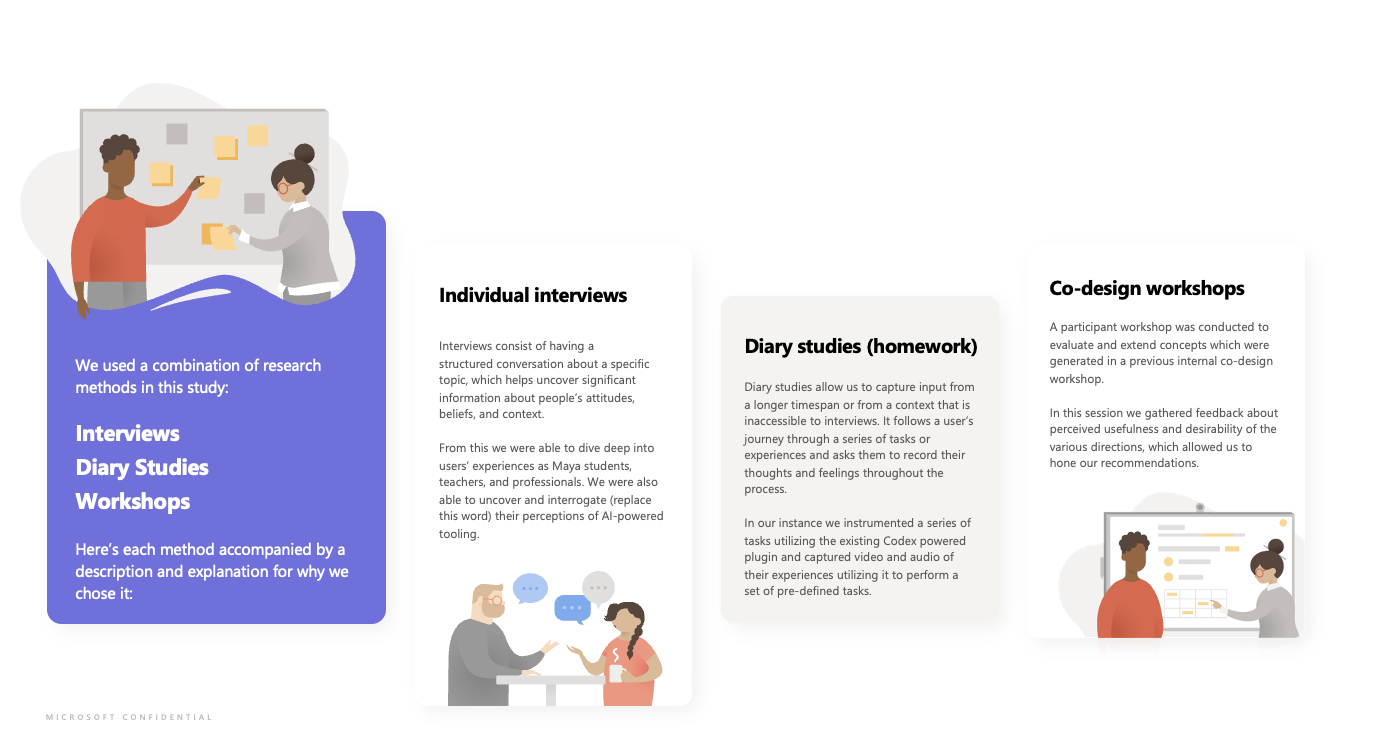
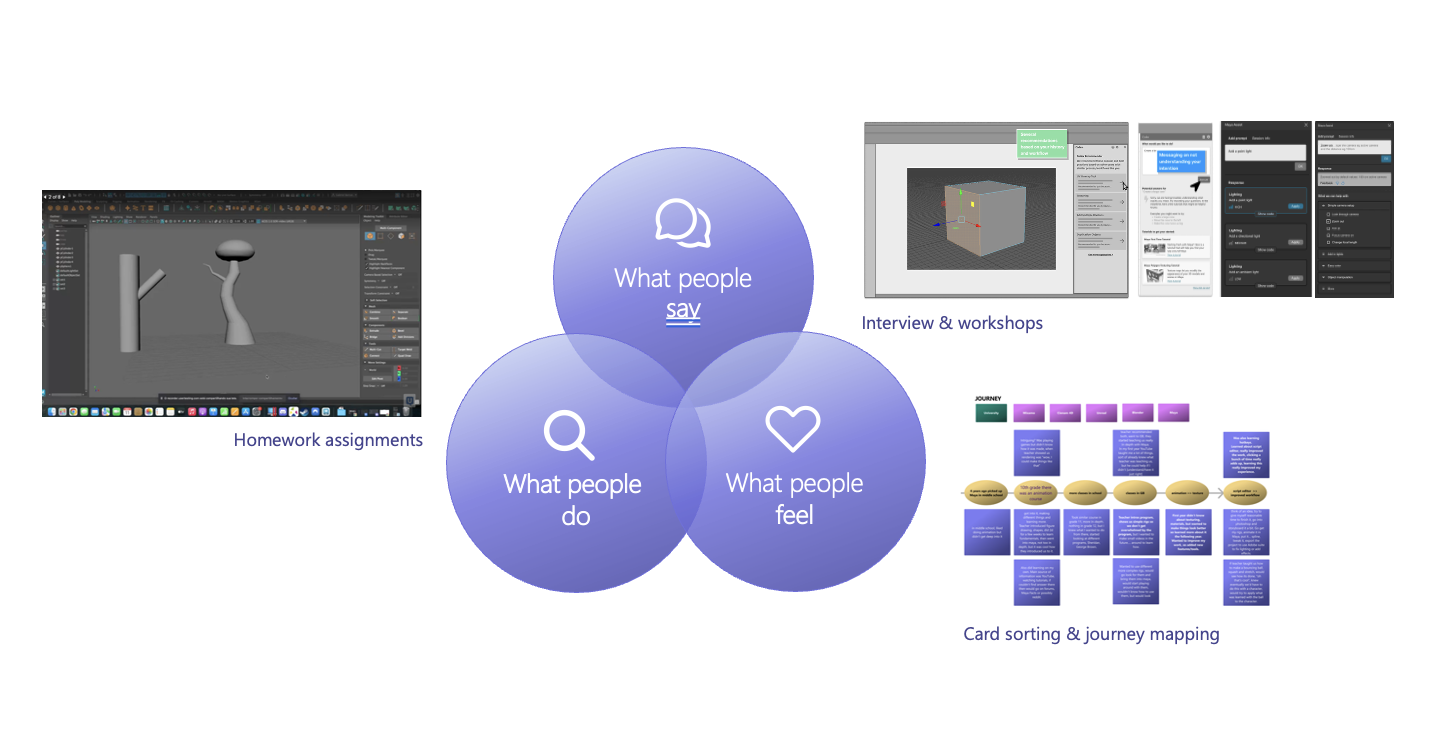
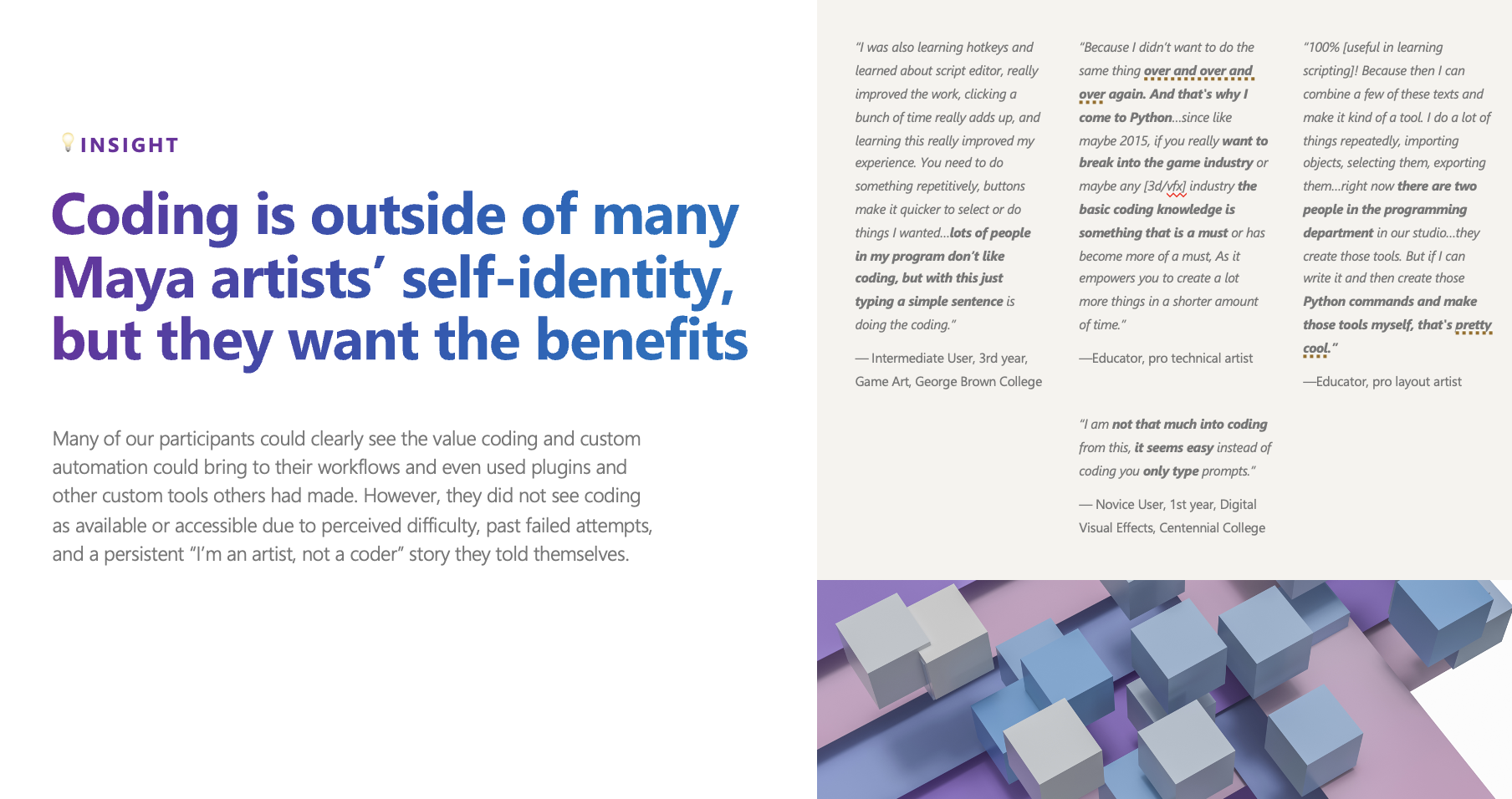
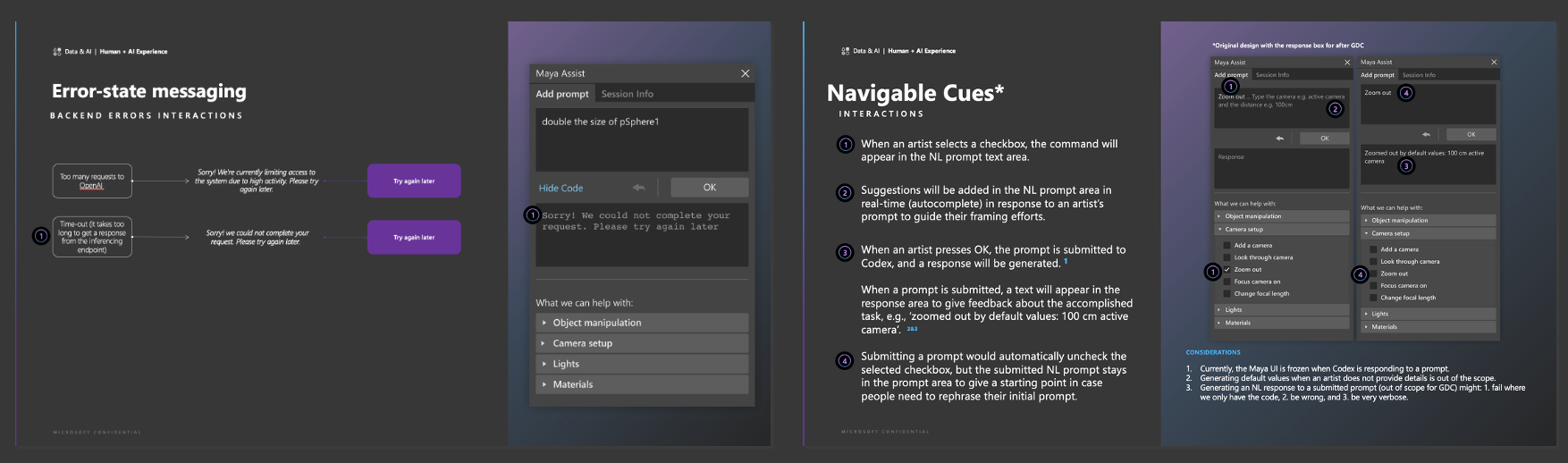
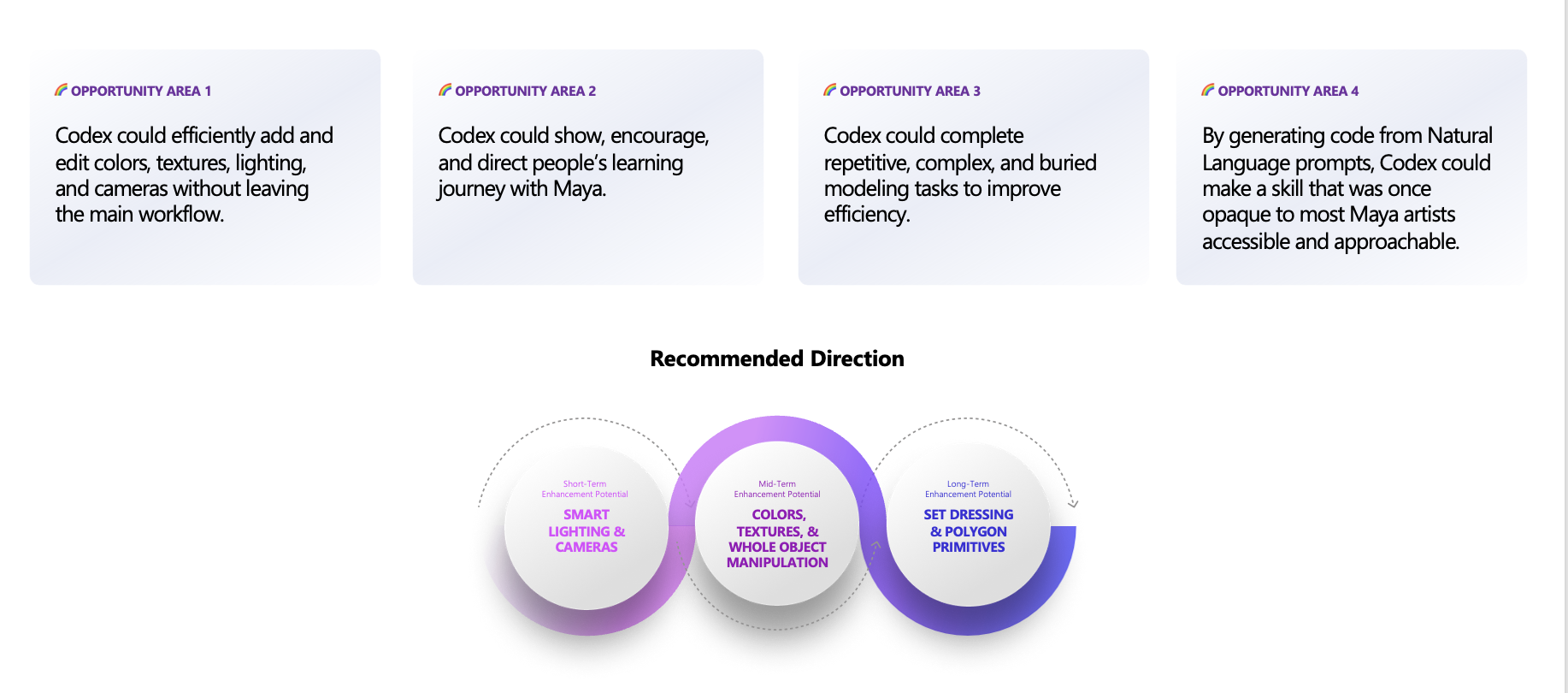
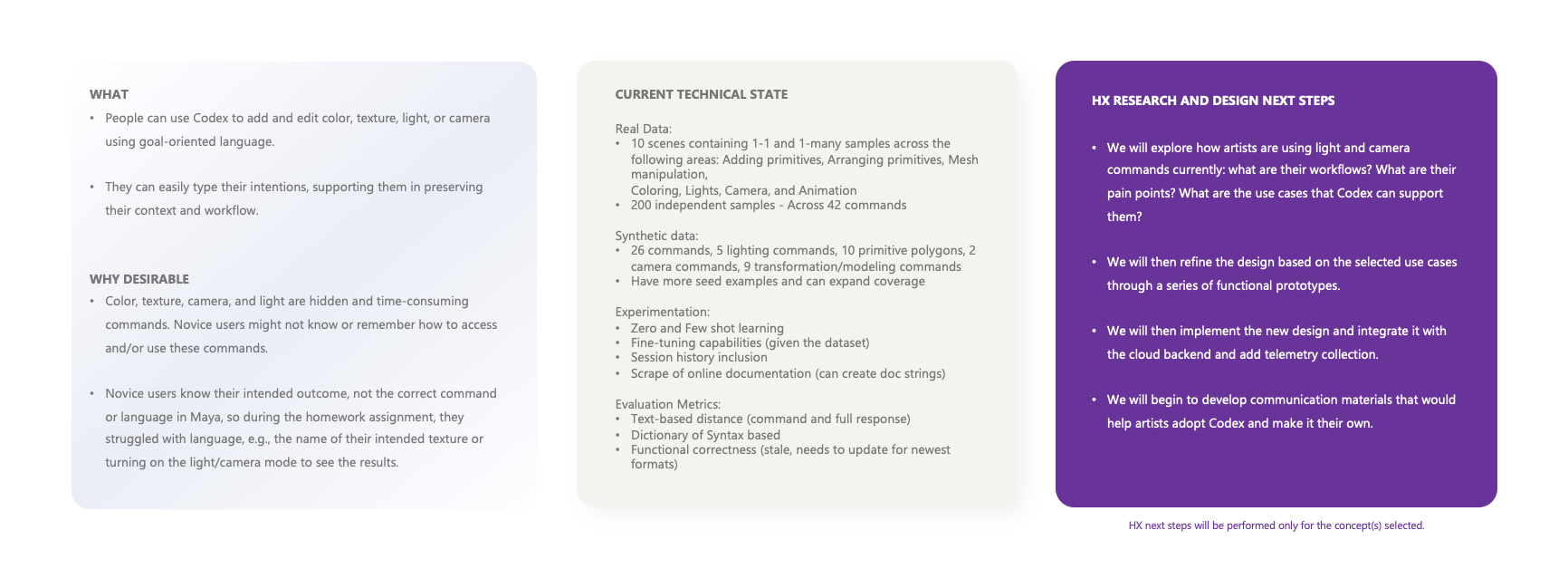
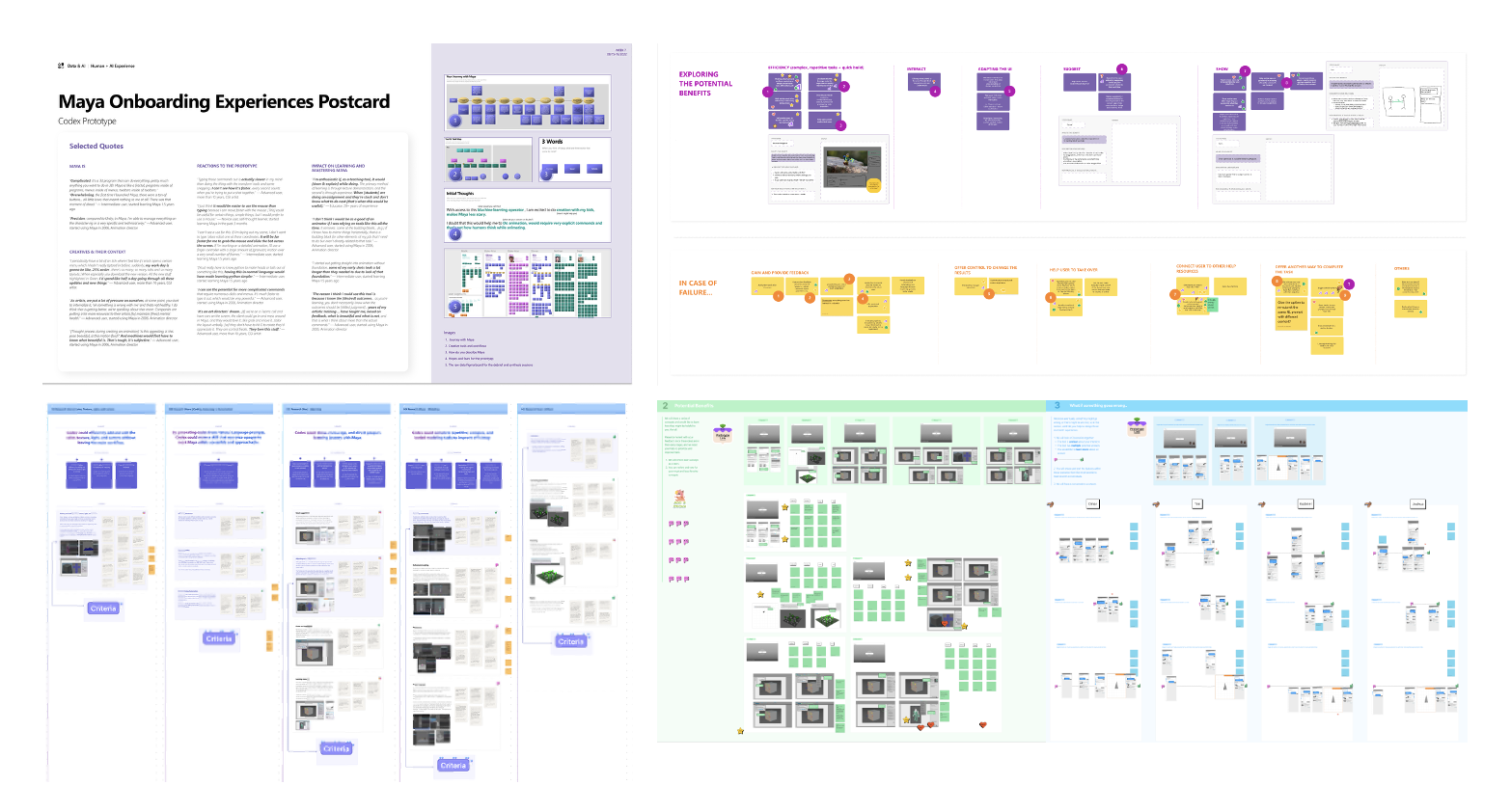
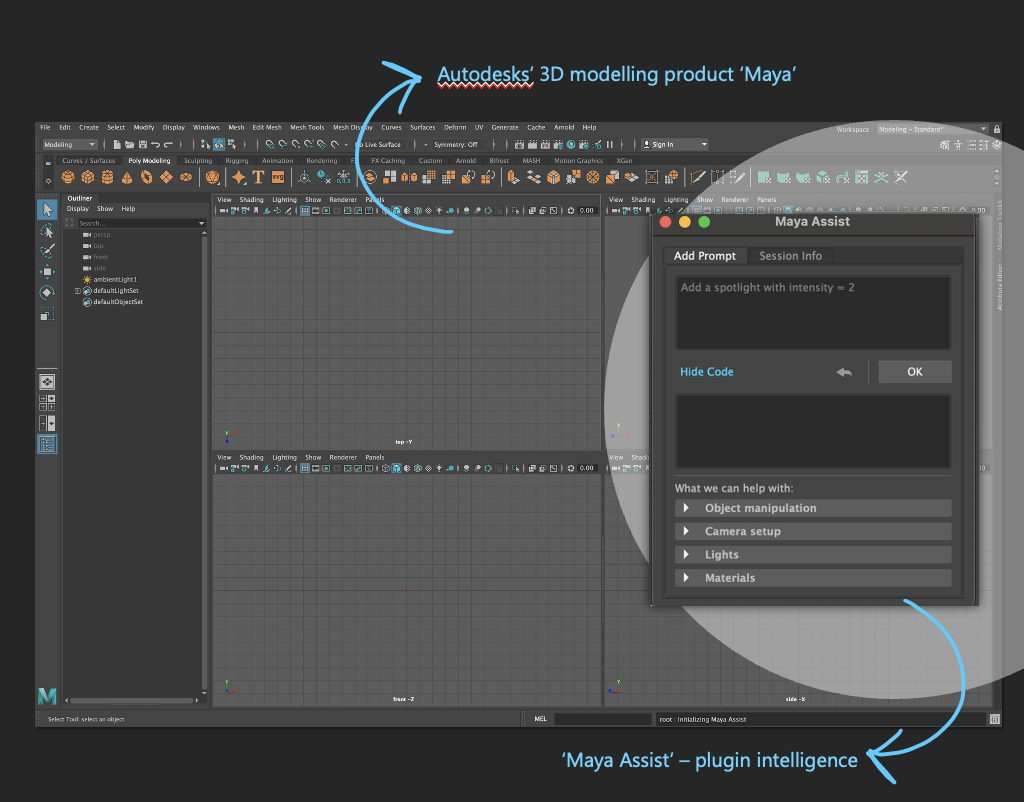
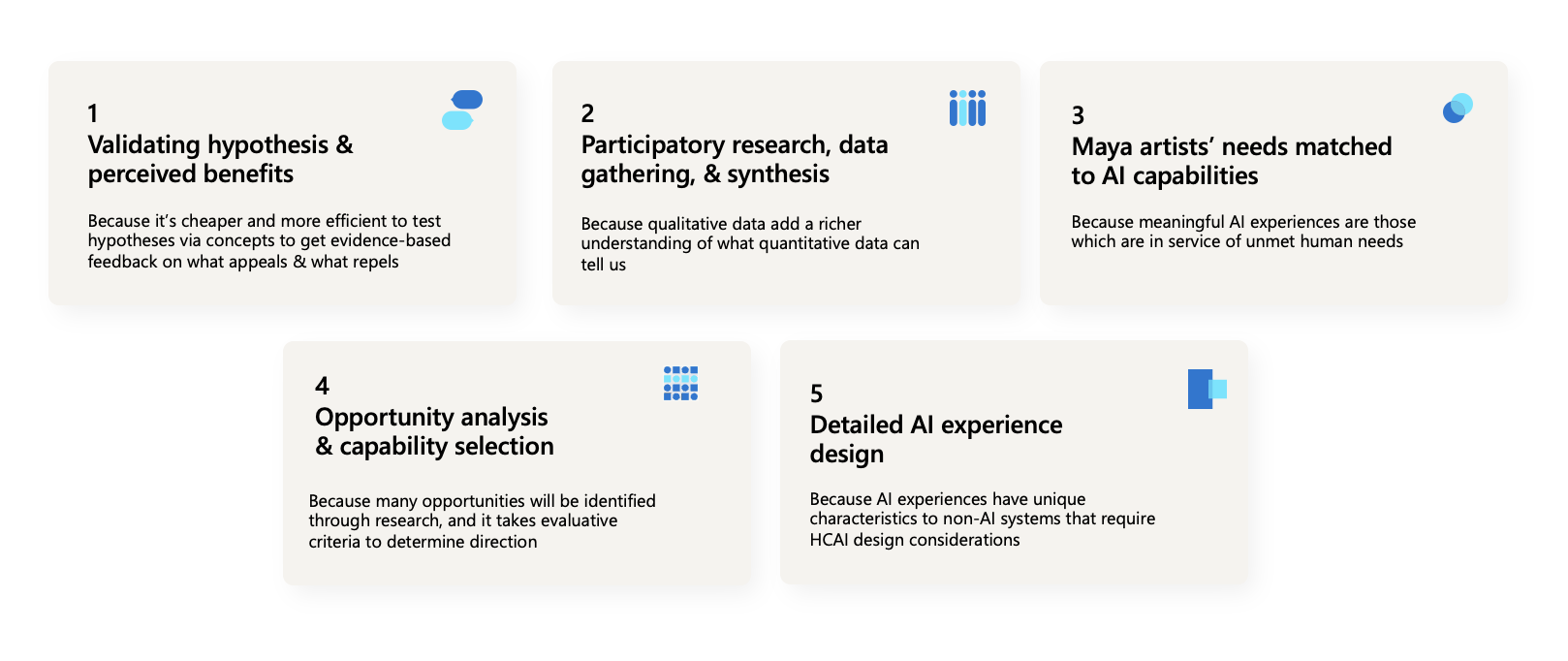
Through interviews, diary studies, and co‑design workshops, the team identified evidence‑based opportunity areas where AI could responsibly assist while preserving artistic control over aesthetic outcomes. The resulting system concept leveraged natural‑language prompts to generate executable code within the primary workflow, enabling artists to complete complex or unfamiliar tasks without leaving the application. RAI considerations, impacting the learning pathways, were incorporated into failure modes, feedback loops, and transparency mechanisms.
Validation with Maya artists and Autodesk stakeholders informed opportunity selection and feature prioritization, shaping a responsible roadmap for integrating AI assistance into professional creative workflows. The work demonstrated how Human‑AI design can improve learning and efficiency without compromising creative control.
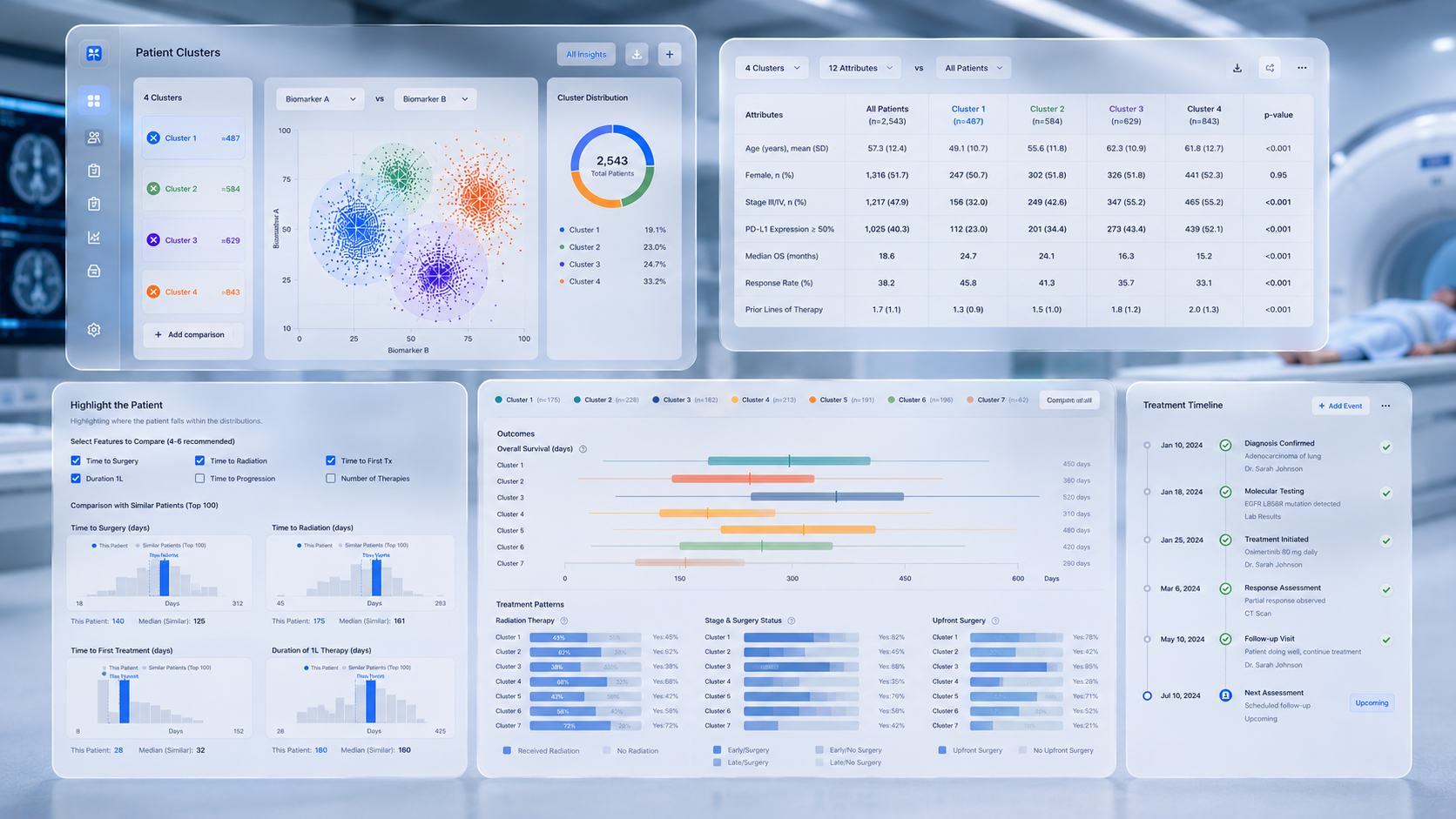
The image was generated with AI.
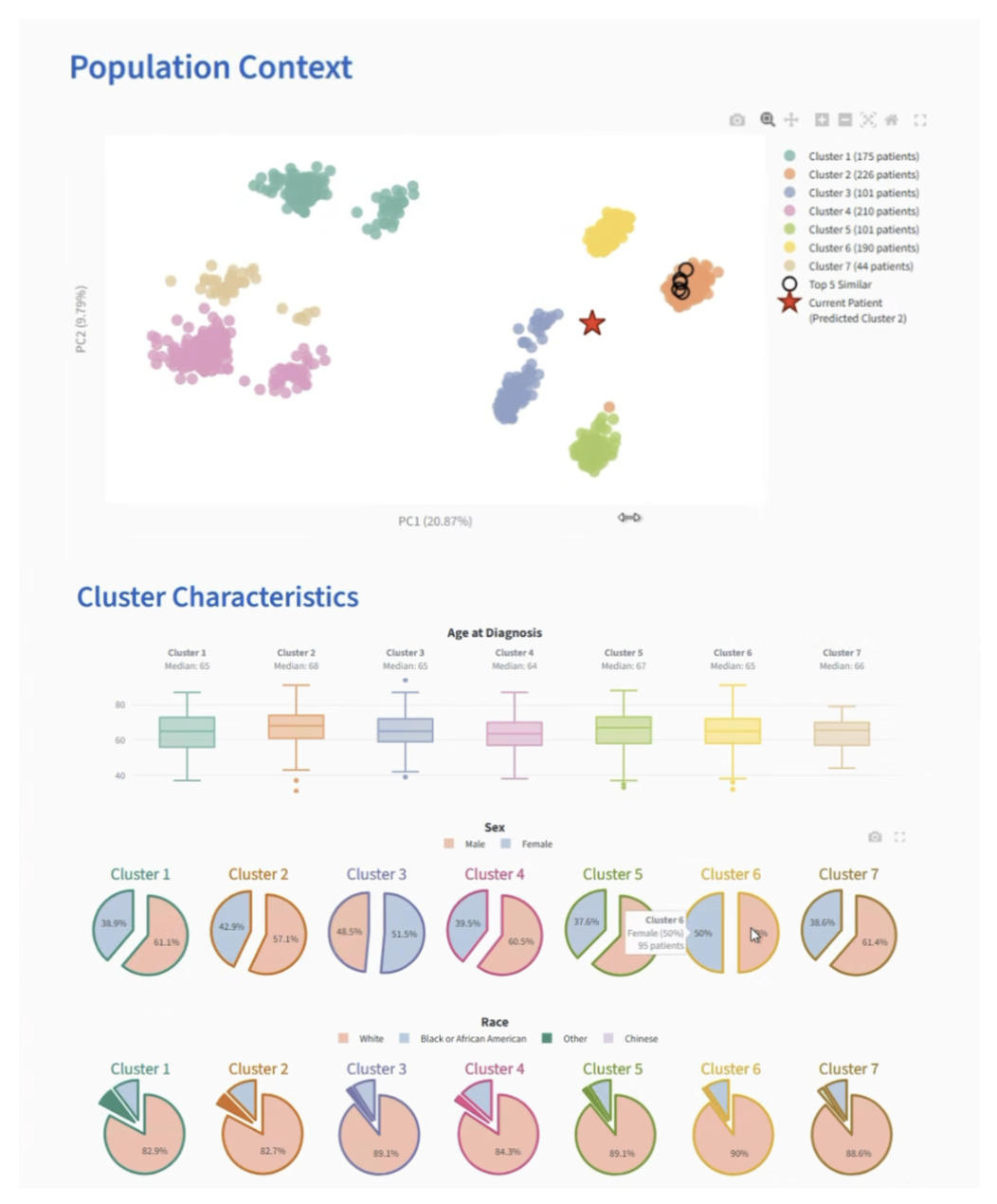
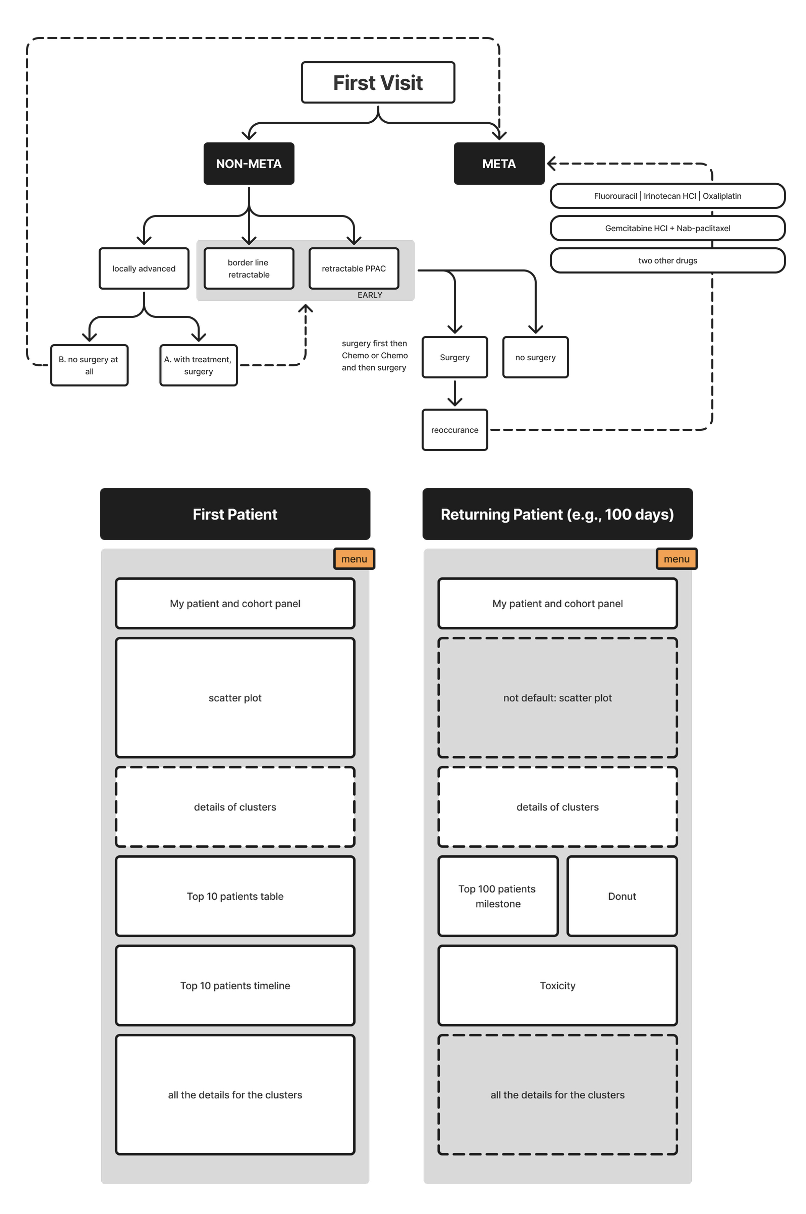
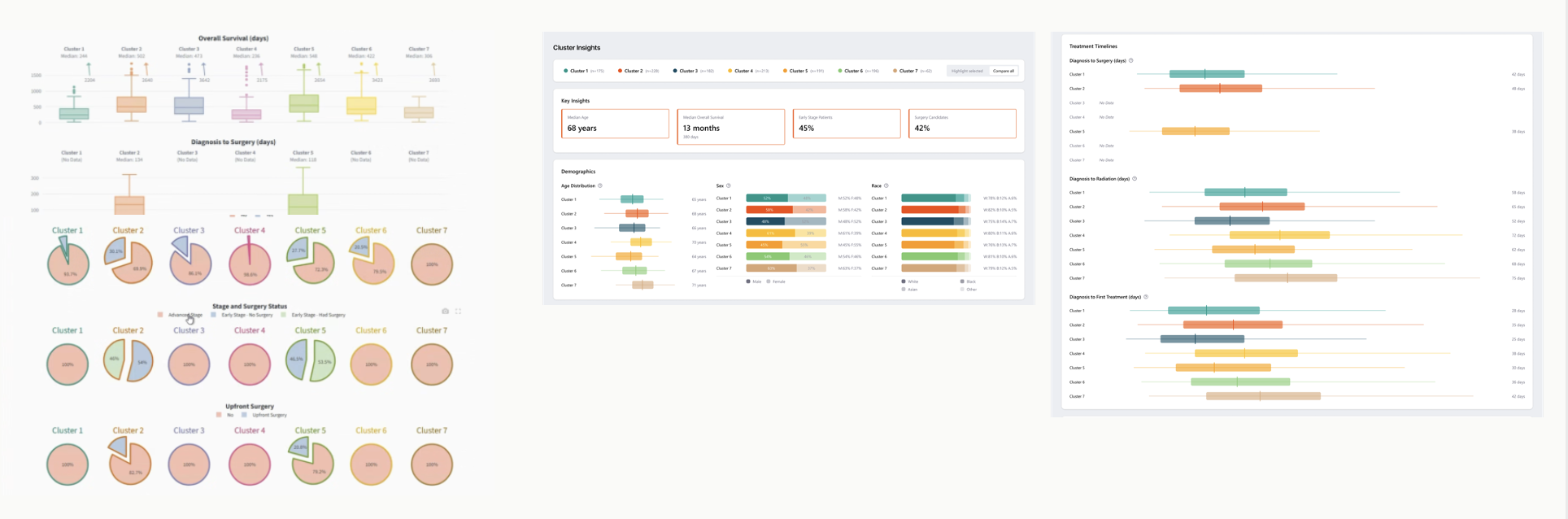
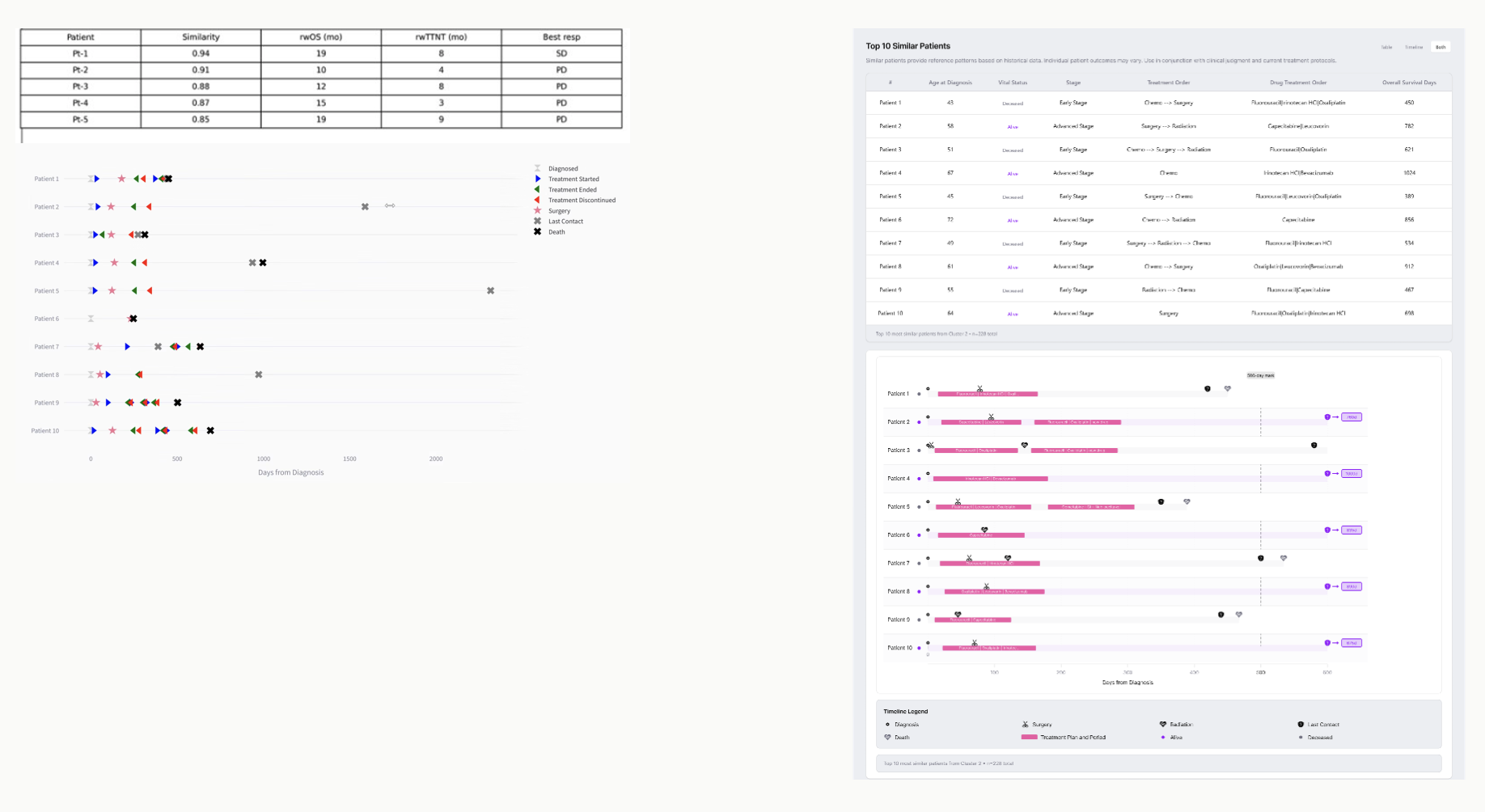
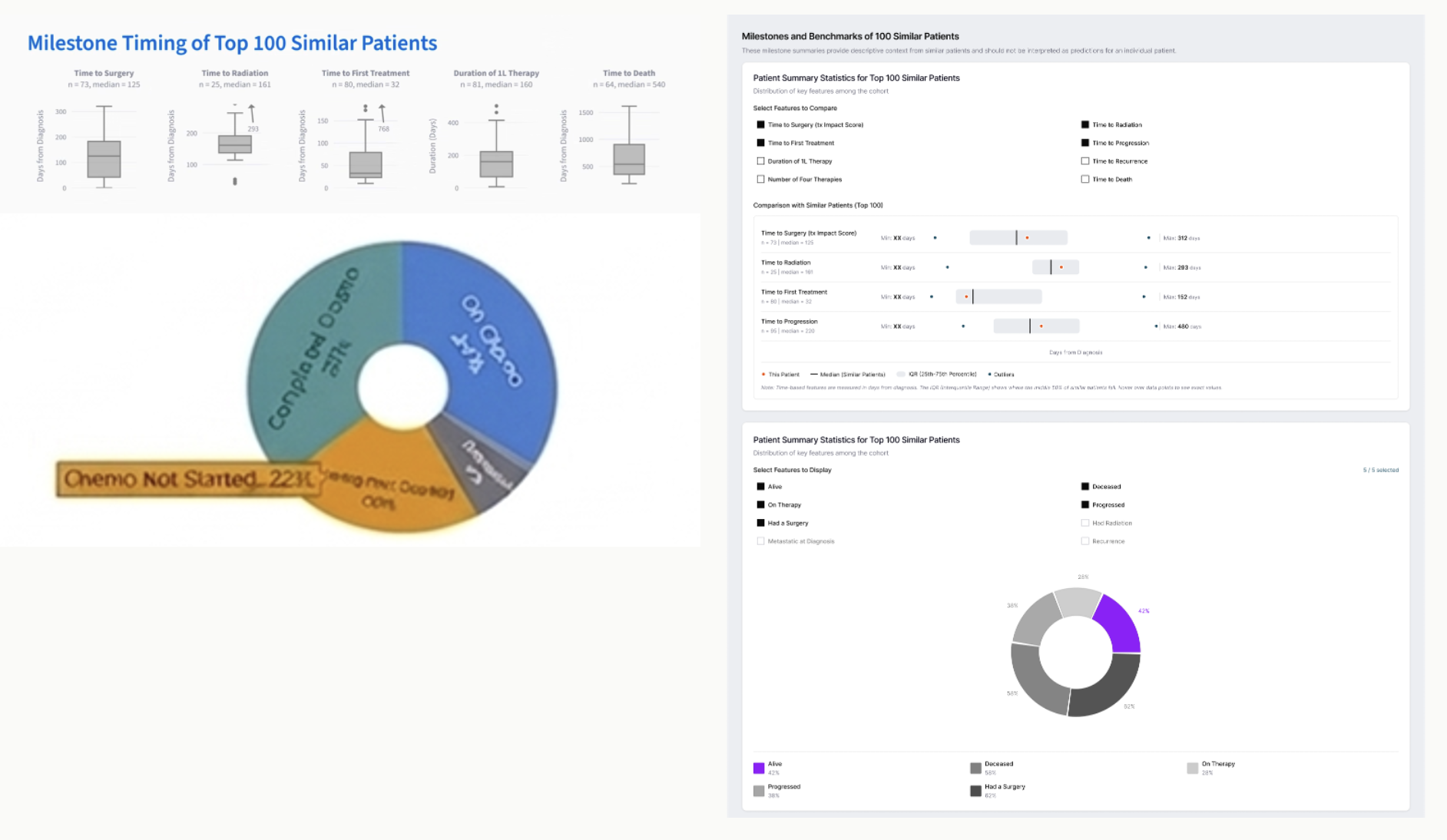
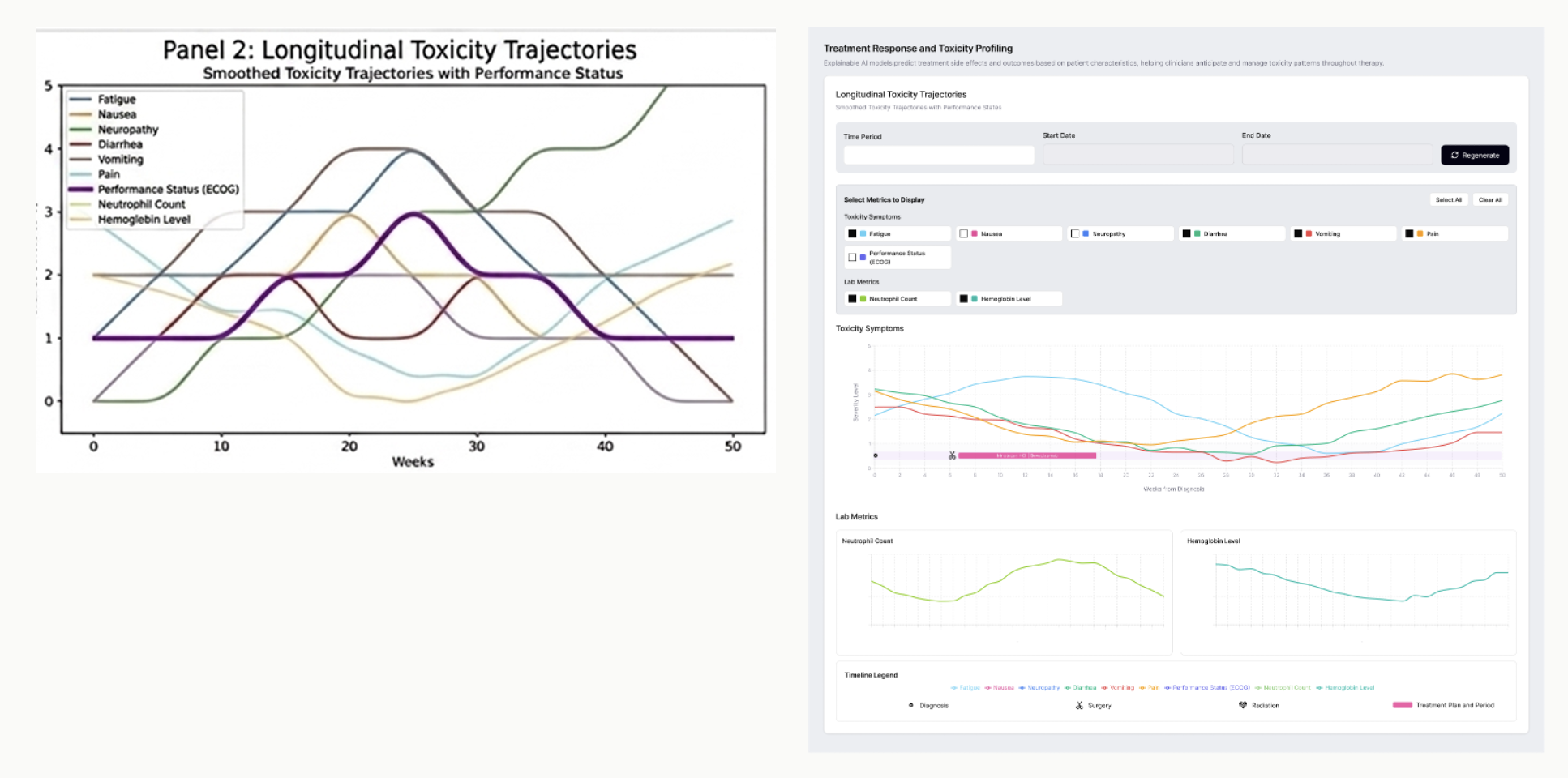
Oncologists treating complex cancer cases make high-stakes treatment decisions inside 10–15 minute appointment windows, often after spending 30–40 minutes preparing for each new patient by recalling similar cases from memory. Roughly a third of patients are seen by nurse practitioners who may not have the same specialized training. The team had a powerful asset — an unsupervised machine-learning model that clusters thousands of past patients and surfaces the ones most similar to the patient in front of the doctor — but it was wrapped in an interface without a clear business value for the clinicians.
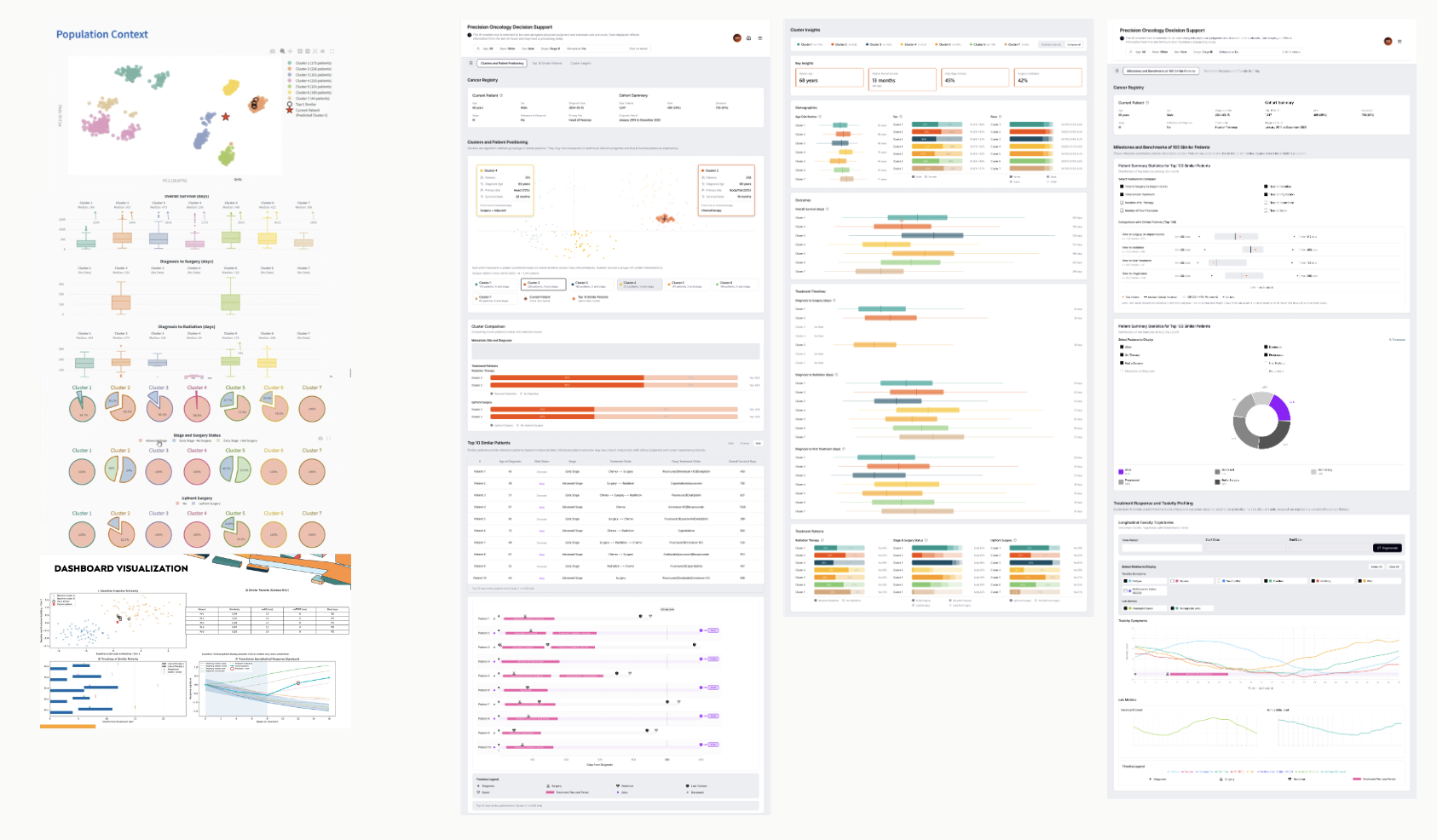
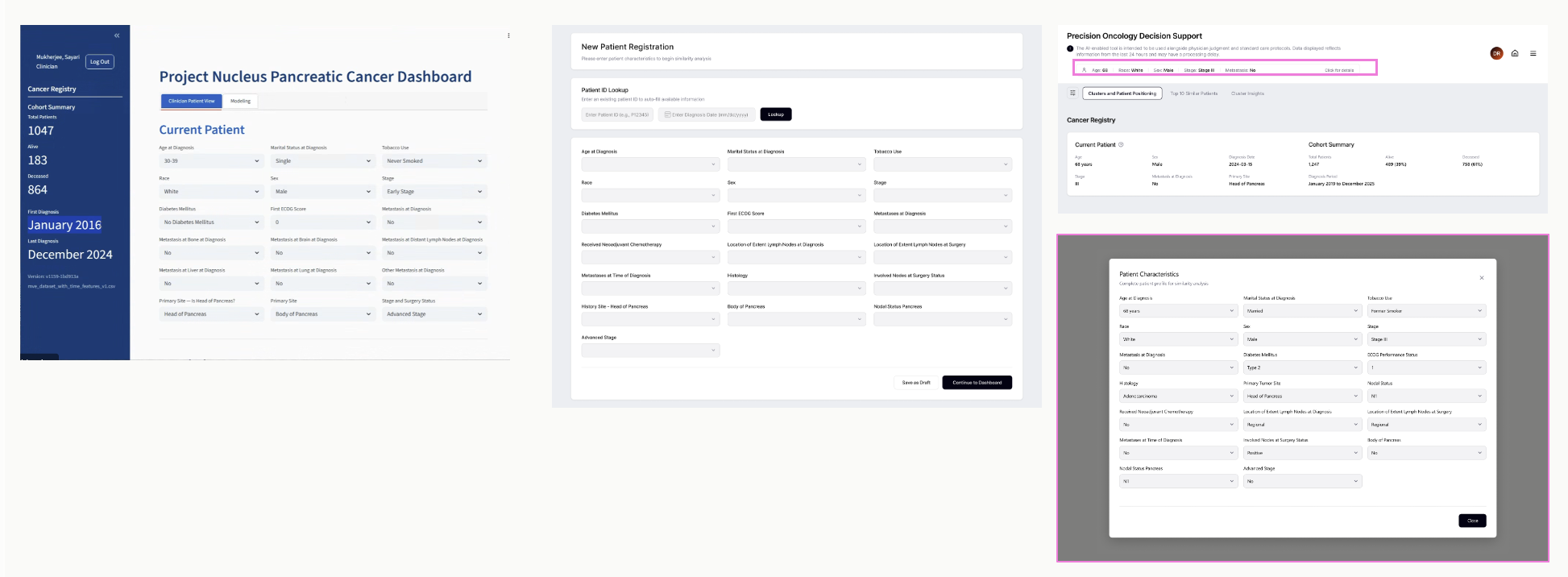
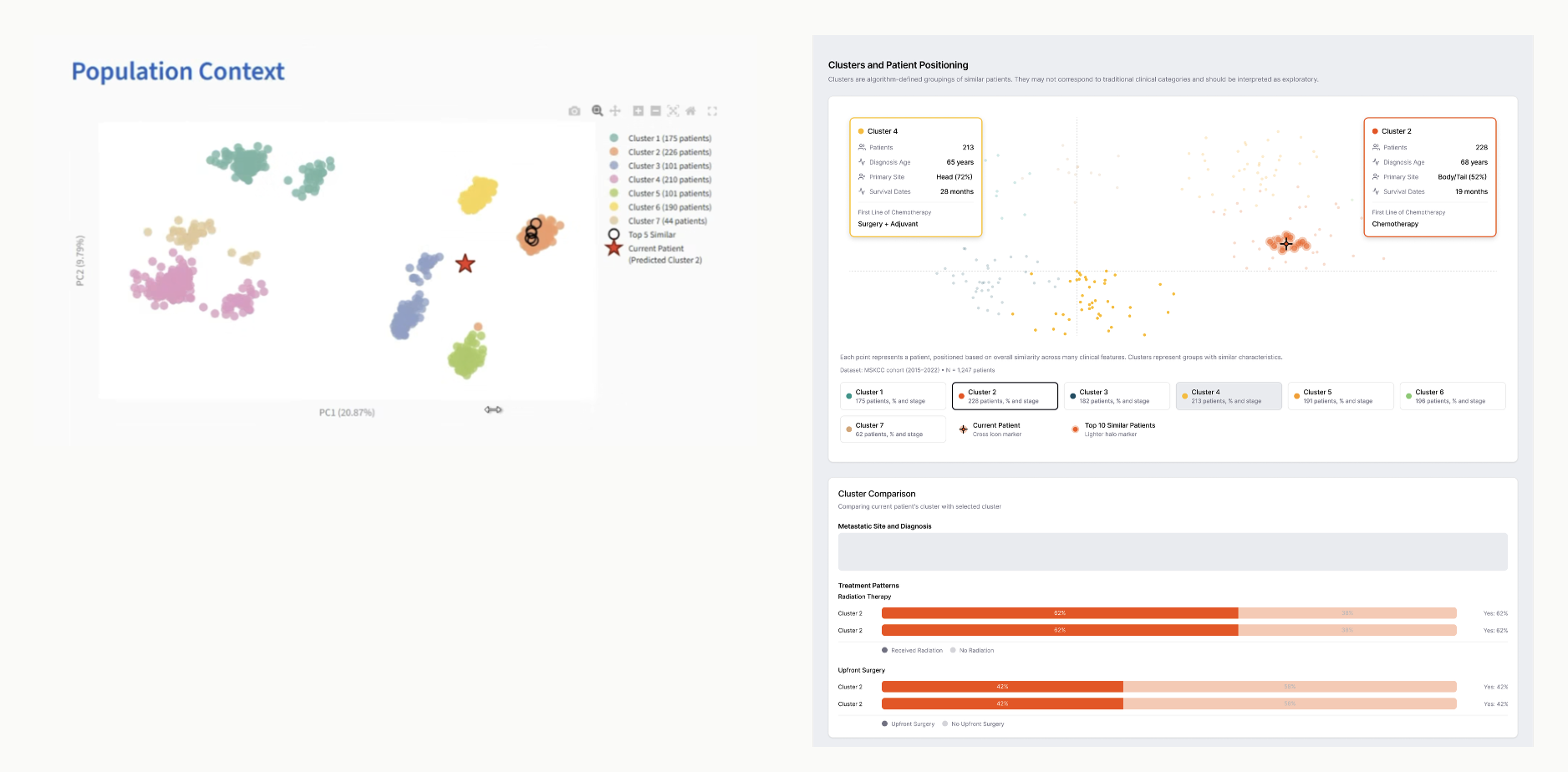
The original tool exposed the underlying analytics rather than translating them into a usable clinical experience: dimensionality-reduction scatterplots with cryptic axes, raw clustering controls, and dense visualizations without clear interpretation. A physician could not tell where their patient landed, why they landed there, or how much to trust it — and the interface invited over-trust, with no guardrails or uncertainty anywhere. It was accurate underneath and unusable on the surface.
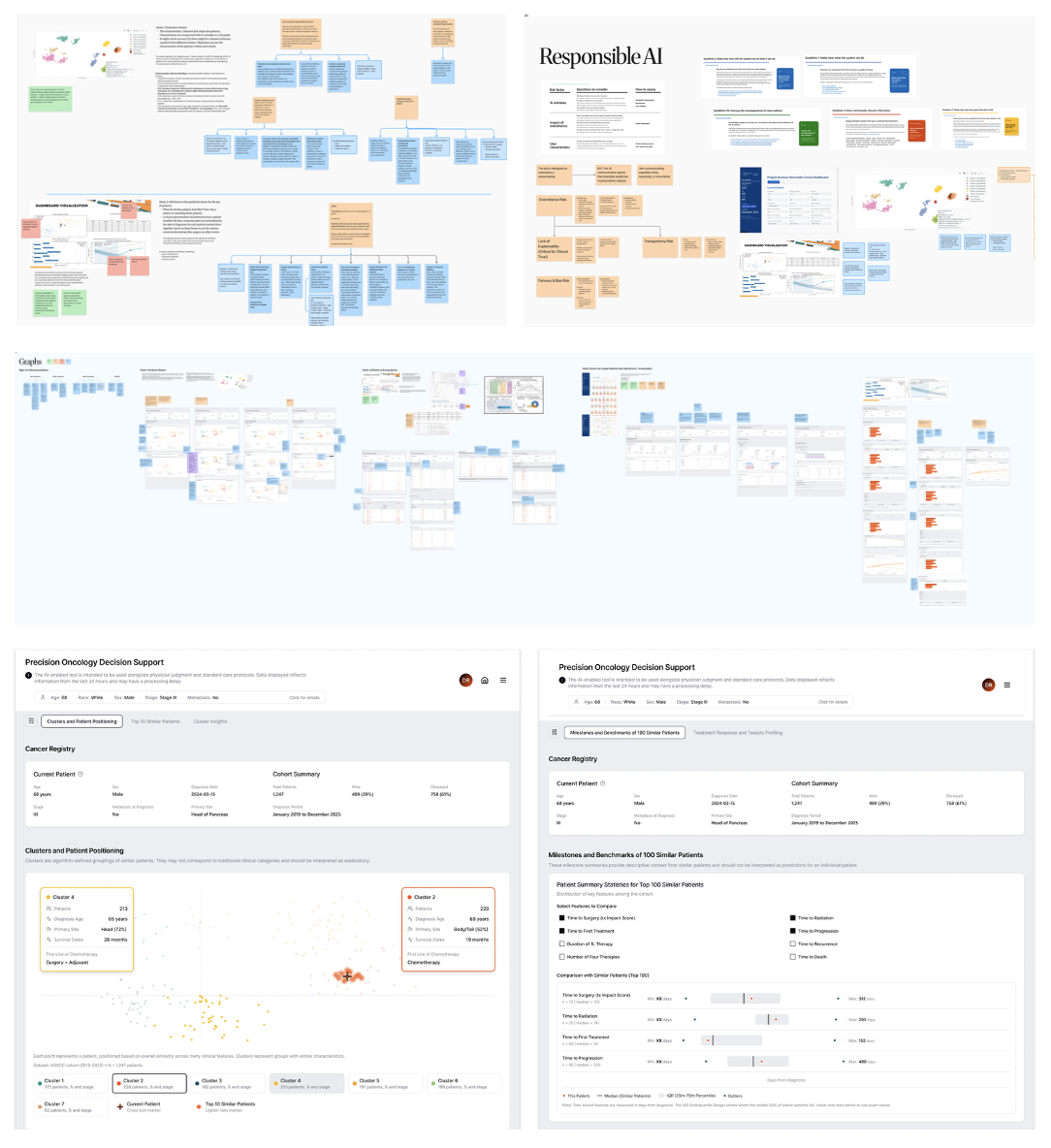
Reframed the product from an algorithm explorer into a clinician sensemaking aid — one that supports physician judgment rather than appearing to replace it — and designed the end-to-end system around how oncologists actually think and work.
MVP phase: validated business and delivery outcomes rather than post-launch metrics. The redesign converted a technically strong but hard-to-use model into an executive-ready, clinician-centered prototype that helped the physician champion communicate the product vision, build leadership confidence, and move the solution closer to launch readiness.
The prototype also created organizational value for the delivery team. By making the experience tangible in Figma Make, design aligned data science, engineering, experimentation, and application teams around a shared direction, improved planning clarity, and elevated stakeholder confidence.
“In a short time, you have added so much value to this project…I’m on the call with the client and a big feedback they are sharing is ‘we should have brought in UX way earlier in the engagement’…even internally in our team, the design have helped so much in aligning data, experimentation and application team.” — Project Manager
“This is really good. I think looks very professionally done and it does elevate in a meaningful way.” — Client Lead Engineer

The image was generated with AI.
Investment professionals must make time‑sensitive portfolio decisions while navigating fragmented workflows across a complex suite of financial tools. People often need to switch between multiple applications, interpret large volumes of data, and manually investigate performance disparities — a process that can range from a brief investigation to several hours depending on the number of variables involved. Despite access to extensive documentation and internal support channels, many users lack the time to engage with these resources, creating knowledge gaps and increasing reliance on manual trial‑and‑error processes to complete routine analyses.
Through a multidisciplinary discovery and research effort, I led the design‑driven exploration of how an AI assistant could augment portfolio managers’ workflows without replacing human decision‑making. Partnering with product, engineering, and user research teams, we conducted exploratory interviews with portfolio managers and risk analysts to understand mental models, trust boundaries, and opportunities for AI‑assisted support. Insights informed the prioritization of a Minimum Viable Experiment (MVE) focused on enabling natural‑language interaction with platform capabilities, allowing users to query portfolio constraints and generate “what‑if” scenarios without navigating multiple applications. Design choices emphasized transparency and user oversight, ensuring the assistant supported informed decision‑making while leaving execution and regulatory validation with the investment team.
Project details are presented at a high level to maintain confidentiality. Additional information is available upon request.
Project details are presented at a high level to maintain confidentiality. Additional information is available upon request.